Author: Kai18

  • MockingMerriment1784453036

    MockingMerriment1784453036

    Get ready for the most epic dinosaur adventure of your lifetime. Opening on August 8 in Bangkok, Thailand, Jurassic World: The Experience is set to become the world’s largest and most immersive dinosaur-themed attraction, covering a massive 44,000 square feet. With a staggering investment of $35 million, this breathtaking park brings the blockbuster franchise to life like never before.

    Visitors can walk among full-scale animatronic dinosaurs, explore Isla Nublar in vivid detail, and come face-to-face with iconic creatures like the Tyrannosaurus rex and Velociraptors in a realistic jungle setting. The experience promises cutting-edge technology, interactive zones, sound effects, lighting, and lifelike movements that will make guests feel like they have stepped straight into the world of Jurassic Park.

    Unlike a typical museum exhibit, this attraction is designed to fully engage your senses. Visitors will be able to tour themed environments, join rescue missions, and experience thrilling encounters from the films in a highly immersive setting. Whether you’re a die-hard Jurassic World fan or simply fascinated by prehistoric life, this one-of-a-kind event blends science, storytelling, and spectacle in unforgettable ways.

    The attraction is also expected to boost tourism in Bangkok and set a new benchmark for entertainment destinations across Asia. Created with both education and excitement in mind, Jurassic World: The Experience will inspire curiosity about paleontology and the incredible creatures that once ruled the Earth.

    Fun Fact: The animatronic dinosaurs used in the attraction can blink, breathe, and even roar—just like the real thing might have over 65 million years ago.

    #MockingMerriment #Paleontology #PrehistoricLife #JurassicWorld #Dinosaurs #JurassicPark #ImmersiveExperience #DinosaurPark #Bangkok #FamilyEntertainment


  • MockingMerriment1784445771

    MockingMerriment1784445771

    What if the first use of fire wasn’t for cooking at all? A bold new theory suggests that early humans may have harnessed fire primarily to preserve meat and keep predators away—not just to roast their food. This challenges long-held beliefs about how our ancestors survived and thrived in harsh prehistoric environments.

    Recent research led by Miki Ben-Dor, a paleoanthropologist at Tel Aviv University, argues that smoking meat was likely the earliest and most critical use of fire. Cooking meat does offer a slight energy benefit, increasing digestibility by about 8 percent. But according to Ben-Dor’s calculations, that gain was not enough to justify the effort of maintaining a fire purely for cooking. Instead, the ability to smoke and dry meat would have allowed early humans to preserve massive quantities of calories from big kills and make that food portable for their nomadic lifestyle.

    When a single hunted animal could provide nearly a million calories, preserving that meat became a matter of survival. Smoking meat not only extended its shelf life but also reduced its weight by removing moisture, making it easier to carry across long distances. This is a practice still seen among modern hunter-gatherers in parts of Africa today. Meanwhile, fire would have served a dual purpose: warding off scavengers and predators while also drying out the meat over time.

    The origins of fire use likely go back nearly a million years, long before Homo sapiens appeared. It may have started with early humans gathering fire from natural wildfires and learning how to keep it alive and portable. Over time, this mastery of fire would lay the foundation for advanced survival strategies.

    Fun Fact: Some of the earliest evidence of fire use predates even Neanderthals, suggesting that our distant ancestor Homo erectus may have been the first to recognise the power of flame.

    #MockingMerriment

    #SurvivalStrategies #FireUse #ScienceFacts

    #Archaeology #Paleontology #AncientHumans #HumanEvolution #EarlyHumans #PrehistoricLife

  • MockingMerriment1784438571

    MockingMerriment1784438571

    More than 4,000 years before modern observatories or space telescopes, the people of ancient Mesopotamia were already looking skyward and recording the movement of the stars. One extraordinary artifact from the city of Uruk offers proof of just how far their knowledge reached. A clay tablet etched with three simple circles holds one of the oldest known examples of mathematical astronomy in human history.

    Discovered in the ancient city of Uruk, in what is now southern Iraq, this clay tablet features cuneiform script alongside geometric patterns that appear to represent astronomical calculations. Thought to date back to the Babylonian period, the tablet offers evidence that early scholars understood how to track celestial bodies and record their positions using abstract mathematical shapes.

    Uruk was not just a city of bricks and temples. It was one of the earliest centres of written language, science, and intellectual life. The presence of this tablet highlights the sophistication of Babylonian mathematics and the deep cultural importance of astronomy in their society. Observing the heavens was not just a scholarly activity—it played a practical role in agriculture, navigation, religious rituals, and timekeeping.

    The circles carved into the clay are believed to reflect planetary movements or celestial cycles, abstracted into geometry with remarkable precision for the time. This kind of abstraction is rare in early history and shows how the Babylonians were pioneers in linking mathematics with natural observation. Their ideas would influence Greek, Islamic, and later Western astronomy for thousands of years.

    Today, the tablet is preserved in the Babylonian Gallery of the Iraqi Museum in Baghdad. It stands not just as a relic, but as a record of early human curiosity, intellect, and the effort to make sense of the sky above.

    Fun Fact: Some scholars suggest that these early circular calculations might represent the earliest known example of a form of trigonometry—over a thousand years before the Greeks developed theirs.

    #MockingMerriment #PrehistoricLife

    #AncientScience #BabylonianAstronomy #AncientHistory #Archaeology #Uruk #HumanHistory #Mesopotamia #Mathematics

  • MockingMerriment1784430169

    MockingMerriment1784430169

    Pop culture loves showing Tyrannosaurus rex charging through rivers or diving after prey like a prehistoric crocodile, but science tells a more realistic and less cinematic story. While T. rex could likely swim, recent studies suggest its aquatic abilities were far from graceful or predatory. In fact, it probably relied on a version of the doggy paddle just to stay afloat.

    Palaeontologists believe T. rex was buoyant thanks to its massive, air-filled bones and strong hind limbs. It may have been able to cross short bodies of water, slowly propelling itself with rhythmic leg motions. However, with its tiny arms and upright build, speed and manoeuvrability in water were limited. It’s much more likely the king of the dinosaurs waded or swam awkwardly rather than sliced through water like a giant reptilian torpedo.

    Supporting this theory are trace fossils and anatomical reconstructions comparing T. rex to other theropods. Studies on smaller theropods show that they could swim short distances using just their legs, leaving parallel scratch marks on ancient riverbeds. If T. rex shared this trait, it could have used a similar motion—though probably with more splashing and less grace.

    The takeaway? While it’s not impossible that T. rex swam to survive or explore new territory, it was no aquatic apex predator. It was more of a strong wader, capable of crossing rivers or flooded areas if needed, but certainly not chasing prey underwater like some movies suggest.

    Fun Fact: Despite its awkward swimming style, T. rex had hollow bones similar to birds, which helped it stay buoyant even with its massive frame.

    #MockingMerriment #Theropods #TyrannosaurusRex #FossilFacts #CretaceousPeriod #ScienceVsPopCulture #Dinosaurs #DinosaurMyths #Paleontology #PrehistoricLife

  • MockingMerriment1784424818

    MockingMerriment1784424818

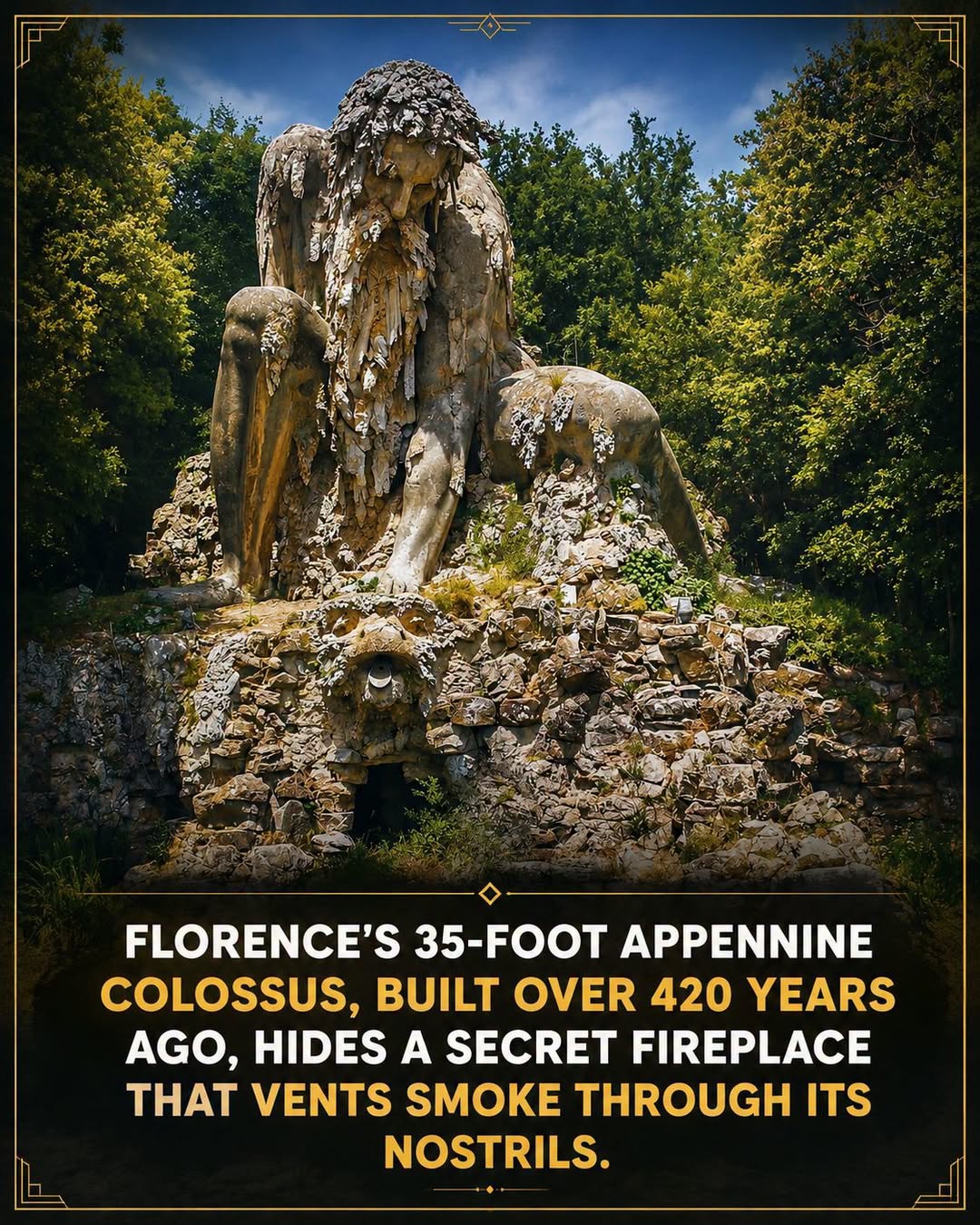
    Standing nearly eleven metres tall above a reflective pond in the gardens of Villa di Pratolino, the Appennine Colossus is a monumental fusion of art, nature, and Renaissance ingenuity. Crafted by Giambologna in the late 1500s, this giant figure embodies the rugged spirit of the Apennine Mountains and blends organically into its landscape. The hookline? A mountain-man statue that actually breathes smoke from its nostrils and hides secret chambers inside.

    At first glance, the Colossus appears as a weathered cliff face shaped into a humanoid form. A brick core capped by carved stone gives it an earthy, organic appearance. But within this sculpted mountain lies a hidden architectural wonder. Visitors have admired it for centuries, yet few realize that inside the statue are multiple chambers. One secret room lies behind the giant’s head, complete with a fireplace designed to channel smoke through the sculpture’s nostrils. When lit, the Colossus seems alive, exhaling smoke like some mythical guardian of the hills.

    Giambologna and his collaborators combined artistry with engineering in a way that feels ahead of its time. The structure functions as both a sculpture and a built environment, inviting visitors to explore and experience not just an image but a spatial journey through stone. The use of hidden spaces and mechanical features reflects the Renaissance fascination with blending fantasy, symbolism, and practical architecture.

    Four centuries later, the Appennine Colossus still captivates. It stands as a testament to a time when imagination shaped gardens into living stories. The statue not only celebrates the natural world but also demonstrates human creativity, merging craftsmanship and theatrical design. Despite centuries of weathering, the Colossus retains its silent strength, offering visitors a rare encounter with monumental storytelling in stone.

    Fun Fact: The fireplace in the secret chamber not only directs smoke through the nostrils but also causes the eyes of the statue to glow red in descending sunlight, creating an uncanny impression that the giant is awakening at dusk.

    #MockingMerriment #HumanHistory #RenaissanceArt #Giambologna #HiddenWonders #PrehistoricLife

    #VillaDiPratolino #ArtAndNature #ArchitecturalMysteries #AppennineColossus

  • MockingMerriment1784422965

    MockingMerriment1784422965

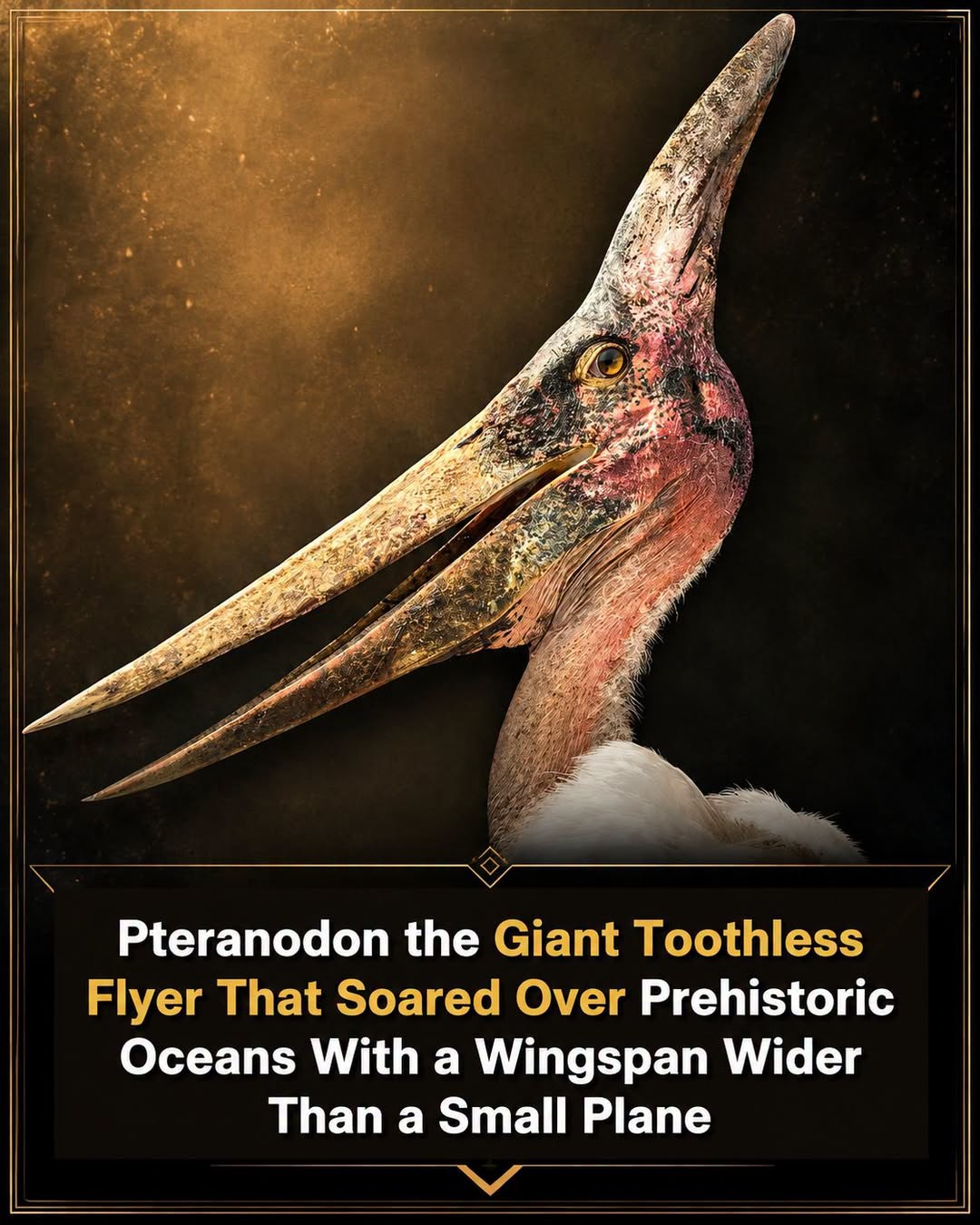
    It had no teeth, but it ruled the skies like a silent giant. Pteranodon was not a dinosaur but a flying reptile, one of the largest ever to take to the air during the late Cretaceous period. With wingspans stretching over 7 metres, these extraordinary creatures glided above the warm coastal seas of what is now North America, searching for fish and other marine life.

    The hookline? Pteranodon flew without a single tooth in its beak, relying instead on speed, precision, and its sharp-edged jaws to snatch prey mid-flight. Its long, lightweight skull featured a distinct upward curve in the upper jaw, and that massive crest at the back of the head helped with stability in flight. Males often had much larger crests than females, possibly for attracting mates or steering during long glides. Their beaks were stork-like, long and sharp, ideal for dipping into water to grab fish.

    Despite their massive wings, their bones were hollow and light—an evolutionary advantage that allowed for efficient soaring over vast distances. Pteranodon is often mistaken for a dinosaur, but it actually belongs to a separate group called pterosaurs. Unlike birds, it had no feathers. Its wings were formed by skin and muscle membranes stretched across elongated finger bones, a unique design among flying creatures.

    Some researchers suggest that Pteranodon may have nested on cliffs or rocky shores, gliding effortlessly from high points and using air currents to conserve energy. Others believe it may have launched from water, flapping powerfully with its strong forelimbs before catching lift.

    Fun Fact: Though it had a giant wingspan, the body of Pteranodon was relatively small and lightweight. Its brain was also surprisingly large compared to its body, especially the parts associated with balance and vision, giving it impressive aerial control.

    #MockingMerriment

    #Pterosaur #Paleontology #AncientFliers #Pteranodon #Evolution #FossilDiscovery #MarinePredators #CretaceousPeriod #PrehistoricLife

  • MockingMerriment1784417574

    MockingMerriment1784417574

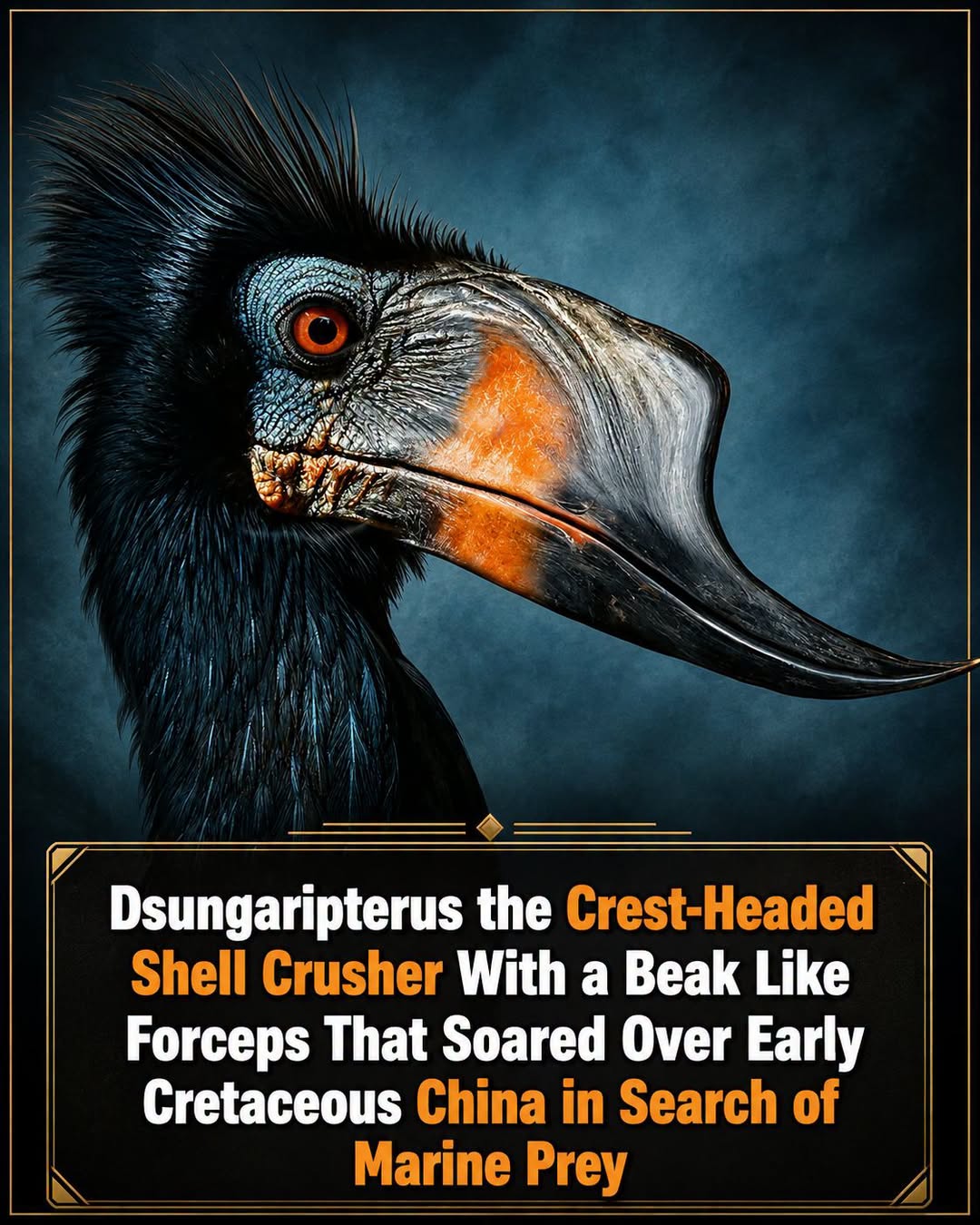
    It didn’t need sharp teeth to dominate its menu. Dsungaripterus—a truly unique pterosaur of the Early Cretaceous—relied on a bizarre set of tools to hunt down its prey. With a wingspan averaging around 3 metres and a skull that looked like it was designed in a workshop of evolutionary oddities, this flying reptile has puzzled and fascinated paleontologists for decades.

    The hookline? Dsungaripterus didn’t need claws or fangs to survive. It cracked shellfish open with a mouth full of bone. Living in what is now China roughly 120 million years ago, Dsungaripterus soared above lagoons and coastal waters in search of food. Its jaws were long, upturned at the tips, and ended in a narrow beak that resembled specialised forceps. Instead of conventional teeth, it had thick, rounded bony projections or “knobs” located at the back of its jaws. This unusual adaptation likely allowed it to pick shellfish off rocks or mud and crush them with ease.

    It wasn’t just its mouth that stood out. Dsungaripterus also sported a thin bony crest running along the top of its skull, with another projecting just behind it. The exact purpose of these crests remains a mystery, but they may have been used for display, species recognition, or even aerodynamic balance during flight.

    Despite being a pterosaur and not a dinosaur, Dsungaripterus was part of the diverse and dynamic ecosystems of the Early Cretaceous. It played a vital role as a specialised feeder, showing how evolutionary innovation allowed flying reptiles to carve out unique niches in prehistoric environments. Its flight style is also believed to have been different from other pterosaurs—rather than high soaring, it may have engaged in short, strong bursts of flapping while spending much of its time foraging along shorelines and tidal flats.

    Fun Fact: The upturned tips of its jaws and shell-crushing knobs have no modern equivalent, making Dsungaripterus a one-of-a-kind in the fossil record. No living animal has exactly this combination of features.

    #MockingMerriment

    #AncientFliers #Dsungaripterus #Paleontology #Evolution #PrehistoricLife #Pterosaur #UniqueAdaptations #CretaceousPeriod #FossilDiscovery

  • MockingMerriment1784415771

    MockingMerriment1784415771

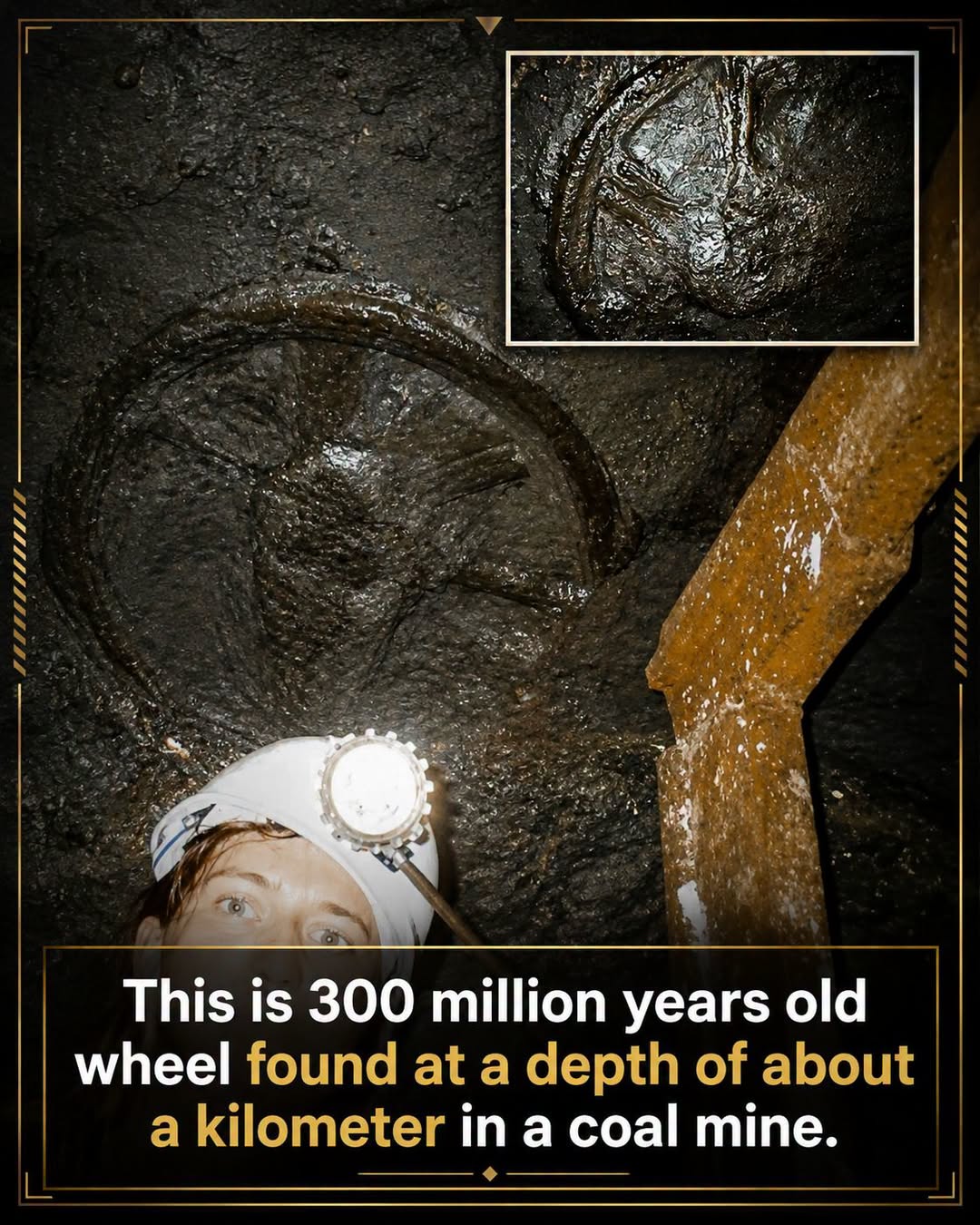
    Deep beneath the Earth’s surface, miners in the Rostov region near Donetsk, Russia, stumbled upon a mystery that still defies explanation. In 2008, while drilling at a depth of around 900 metres into a coal seam known as the J3 ‘Sukhodolsky’ layer, workers uncovered what appeared to be a fossilised wheel imprint embedded in sandstone above the tunnel they had just excavated.

    The discovery was made in Carboniferous-era rock, which dates between 360 and 300 million years ago—long before humans, mammals, or even dinosaurs walked the Earth. Coal seams in this region are formed from ancient swamps that existed during the middle to late Carboniferous period, making the supposed imprint even more puzzling.

    Photos of the anomaly were taken by Deputy Chief V.V. Kruzhilin and shared with mine foreman S. Kasatkin, who reported the find. Unfortunately, due to the nature of mining operations, the imprint was never fully excavated or preserved for further analysis. The site was filled in for safety reasons, and no physical sample of the formation was taken.

    Scientists remain cautious. Without proper study, it’s difficult to determine whether the structure is a natural formation that only resembles a wheel or an imprint left by something artificial. However, the region’s geology supports the age of the coal layers and raises the question of how such a shape could appear in 300-million-year-old rock. Geological processes like diagenesis can preserve the shapes of objects that dissolve over time, much like fossils. If it was once a real wheel-like object, it may have left its imprint before being replaced by surrounding sediment.

    Fun Fact: The Carboniferous period, where this imprint was found, predates not only humans but all dinosaurs by more than 70 million years.

    #MockingMerriment

    #AncientMysteries #CarboniferousPeriod #FossilFacts #PrehistoricLife #EarthHistory

    #Paleontology #UnexplainedFinds #Geology #Archaeology

  • MockingMerriment1784409825

    MockingMerriment1784409825

    What if the oldest known case of cannibalism wasn’t driven by cruelty—but by survival? Inside the depths of Spain’s Gran Dolina cave in Atapuerca, archaeologists uncovered a chilling find: the 850,000-year-old remains of a toddler, processed and butchered by Homo antecessor, one of our earliest human ancestors. The child was only around two years old—and the bones showed signs of decapitation, defleshing, and intentional fracturing, matching patterns typically seen in prehistoric butchery.

    This isn’t fiction. It’s the oldest known evidence of cannibalism in human evolution, dating back nearly a million years. The discovery was made during a recent excavation led by researchers studying Homo antecessor, a species believed to be the last common ancestor of both Homo sapiens and Neanderthals. These ancient humans lived in the Atapuerca region between 1.2 million and 770,000 years ago.

    The remains were found alongside the bones of other animals—all showing similar processing marks. As one researcher put it, “The child was processed like any other prey.” This wasn’t ritualistic or symbolic. This was survival in a harsh Ice Age world, where resources were scarce and even the young weren’t spared. These behaviors provide haunting, yet critical insight into the brutal realities of early human life.

    While this discovery is deeply unsettling, it also opens new windows into the complexities of our species’ past—where early humans made unthinkable choices just to stay alive.

    Fun Fact: Over 30% of all hominin fossils found at Gran Dolina show signs of cannibalism—suggesting it wasn’t rare, but perhaps a normalized survival strategy during prehistoric times.

    #MockingMerriment

    #GranDolina #Atapuerca #FossilDiscovery #PrehistoricLife #HumanEvolution #IceAgeSurvival #HomoAntecessor #HumanHistory #Archaeology #Paleoanthropology

  • MockingMerriment1784409520

    MockingMerriment1784409520

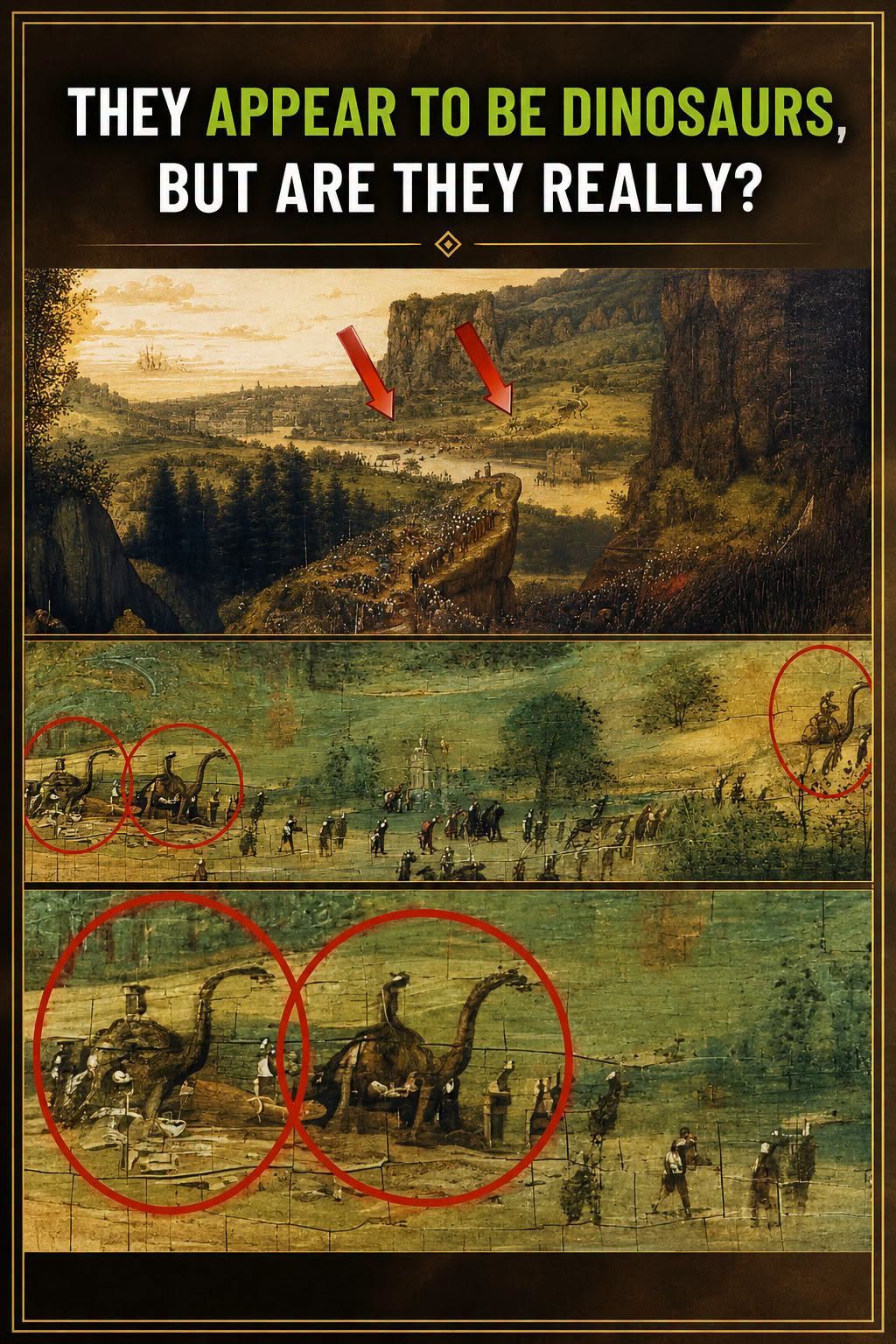
    At first glance, the painting might leave you stunned. The enlarged segments seem to depict humans walking alongside what look like sauropod dinosaurs. Long necks, thick tails, and massive bodies immediately evoke images of Brachiosaurus or Apatosaurus. These visual elements have sparked endless conspiracy theories, claims of time travel, and even suggestions that humans once coexisted with dinosaurs. But what’s really going on here?

    The artwork in question is part of the massive and detailed masterpiece titled The Triumph of Death by Pieter Bruegel the Elder, painted around 1562. Bruegel was known for his densely populated scenes filled with symbolic and often surreal imagery. When zoomed in, the figures highlighted in red circles seem dinosaur-like, but that interpretation falls apart under closer inspection.

    These “dinosaurs” are actually camels, horses, or possibly stylized depictions of elephants or other exotic animals that Bruegel, like many artists of the time, had never seen firsthand. Artists in the Renaissance and Medieval periods often based exotic animals on secondhand descriptions or vague illustrations from travelers’ tales, leading to wildly inaccurate portrayals. The long necks and bulky bodies are likely artistic exaggerations or misinterpretations rather than fossil-inspired imagination.

    There is no scientific evidence that humans ever coexisted with non-avian dinosaurs. Dinosaurs went extinct around 66 million years ago, while anatomically modern humans have only existed for about 300,000 years. Claims suggesting otherwise are not supported by paleontology or any credible scientific research.

    Fun Fact: Pieter Bruegel the Elder painted The Triumph of Death during a time of plague, war, and religious upheaval, which is why the painting is packed with haunting and chaotic imagery. The supposed dinosaurs are just one of many unsettling visual surprises in this iconic work.

    #MockingMerriment #TheTriumphOfDeath #HistoryDecoded #MythBusting #ArtHistory #AncientMysteries

    #Paleontology #PieterBruegel #Dinosaurs #PrehistoricLife