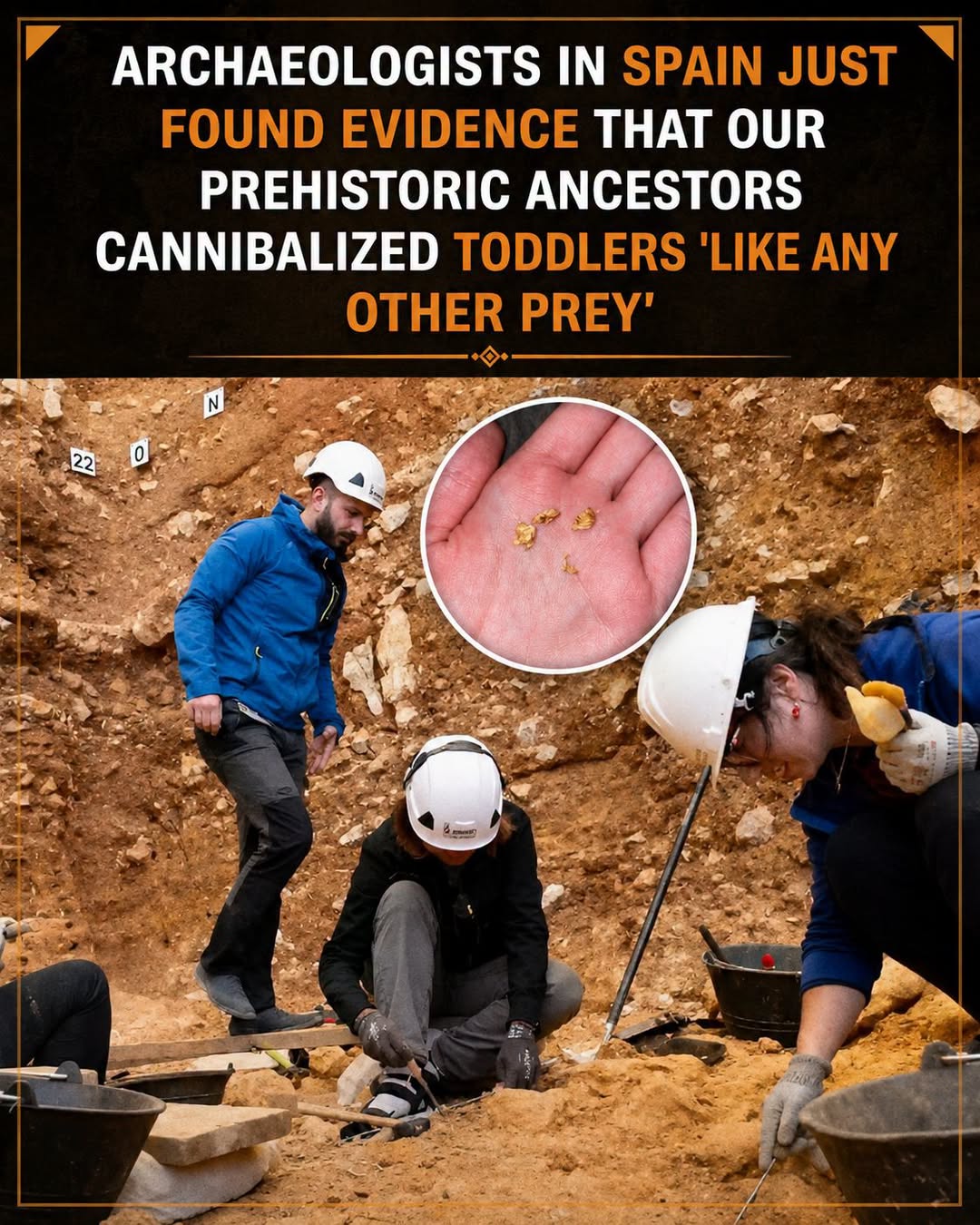
What if the oldest known case of cannibalism wasn’t driven by cruelty—but by survival? Inside the depths of Spain’s Gran Dolina cave in Atapuerca, archaeologists uncovered a chilling find: the 850,000-year-old remains of a toddler, processed and butchered by Homo antecessor, one of our earliest human ancestors. The child was only around two years old—and the bones showed signs of decapitation, defleshing, and intentional fracturing, matching patterns typically seen in prehistoric butchery.
This isn’t fiction. It’s the oldest known evidence of cannibalism in human evolution, dating back nearly a million years. The discovery was made during a recent excavation led by researchers studying Homo antecessor, a species believed to be the last common ancestor of both Homo sapiens and Neanderthals. These ancient humans lived in the Atapuerca region between 1.2 million and 770,000 years ago.
The remains were found alongside the bones of other animals—all showing similar processing marks. As one researcher put it, “The child was processed like any other prey.” This wasn’t ritualistic or symbolic. This was survival in a harsh Ice Age world, where resources were scarce and even the young weren’t spared. These behaviors provide haunting, yet critical insight into the brutal realities of early human life.
While this discovery is deeply unsettling, it also opens new windows into the complexities of our species’ past—where early humans made unthinkable choices just to stay alive.
Fun Fact: Over 30% of all hominin fossils found at Gran Dolina show signs of cannibalism—suggesting it wasn’t rare, but perhaps a normalized survival strategy during prehistoric times.
#MockingMerriment
#GranDolina #Atapuerca #FossilDiscovery #PrehistoricLife #HumanEvolution #IceAgeSurvival #HomoAntecessor #HumanHistory #Archaeology #Paleoanthropology
Leave a Reply
You must be logged in to post a comment.