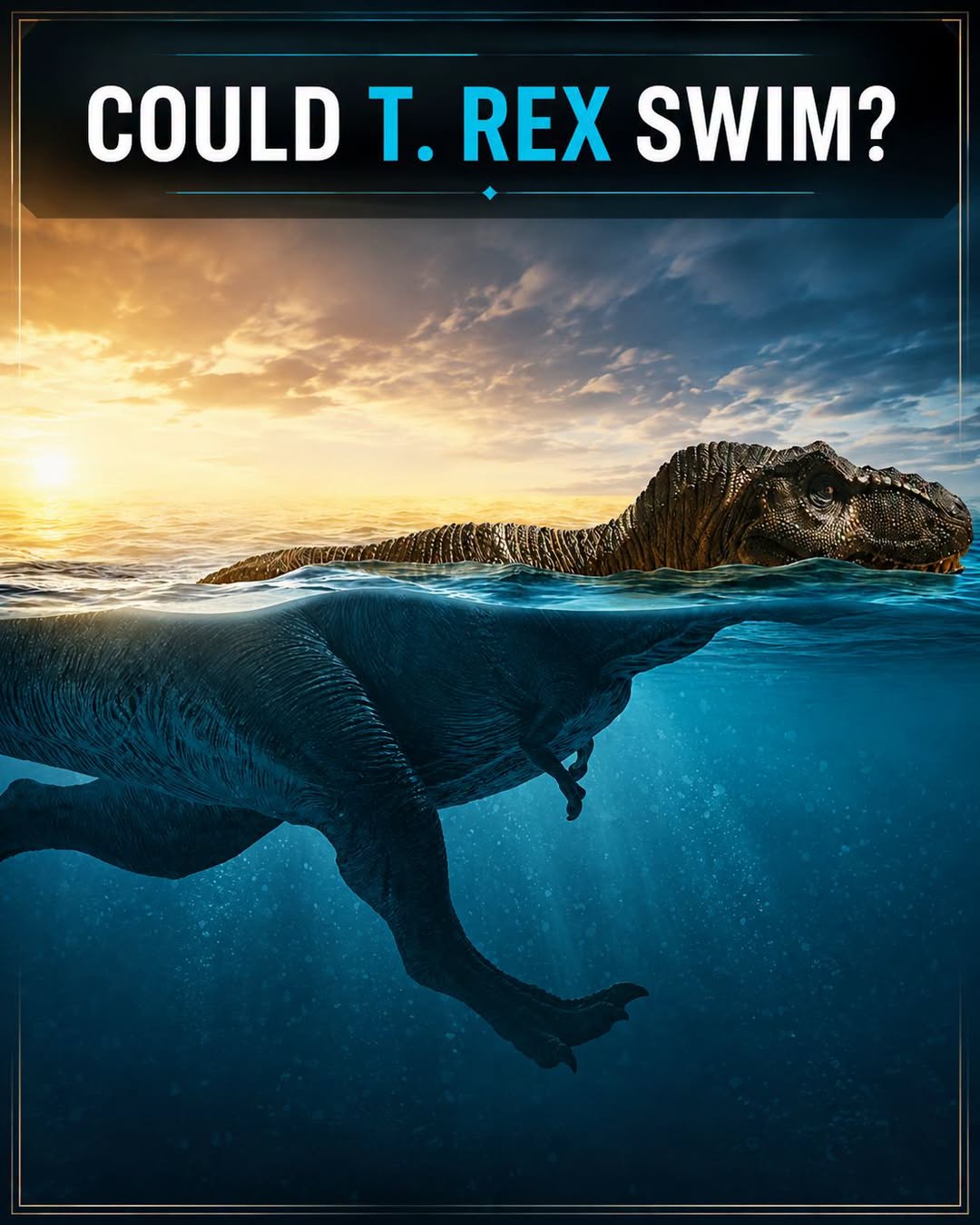
Pop culture loves showing Tyrannosaurus rex charging through rivers or diving after prey like a prehistoric crocodile, but science tells a more realistic and less cinematic story. While T. rex could likely swim, recent studies suggest its aquatic abilities were far from graceful or predatory. In fact, it probably relied on a version of the doggy paddle just to stay afloat.
Palaeontologists believe T. rex was buoyant thanks to its massive, air-filled bones and strong hind limbs. It may have been able to cross short bodies of water, slowly propelling itself with rhythmic leg motions. However, with its tiny arms and upright build, speed and manoeuvrability in water were limited. It’s much more likely the king of the dinosaurs waded or swam awkwardly rather than sliced through water like a giant reptilian torpedo.
Supporting this theory are trace fossils and anatomical reconstructions comparing T. rex to other theropods. Studies on smaller theropods show that they could swim short distances using just their legs, leaving parallel scratch marks on ancient riverbeds. If T. rex shared this trait, it could have used a similar motion—though probably with more splashing and less grace.
The takeaway? While it’s not impossible that T. rex swam to survive or explore new territory, it was no aquatic apex predator. It was more of a strong wader, capable of crossing rivers or flooded areas if needed, but certainly not chasing prey underwater like some movies suggest.
Fun Fact: Despite its awkward swimming style, T. rex had hollow bones similar to birds, which helped it stay buoyant even with its massive frame.
#MockingMerriment #Theropods #TyrannosaurusRex #FossilFacts #CretaceousPeriod #ScienceVsPopCulture #Dinosaurs #DinosaurMyths #Paleontology #PrehistoricLife
Leave a Reply
You must be logged in to post a comment.