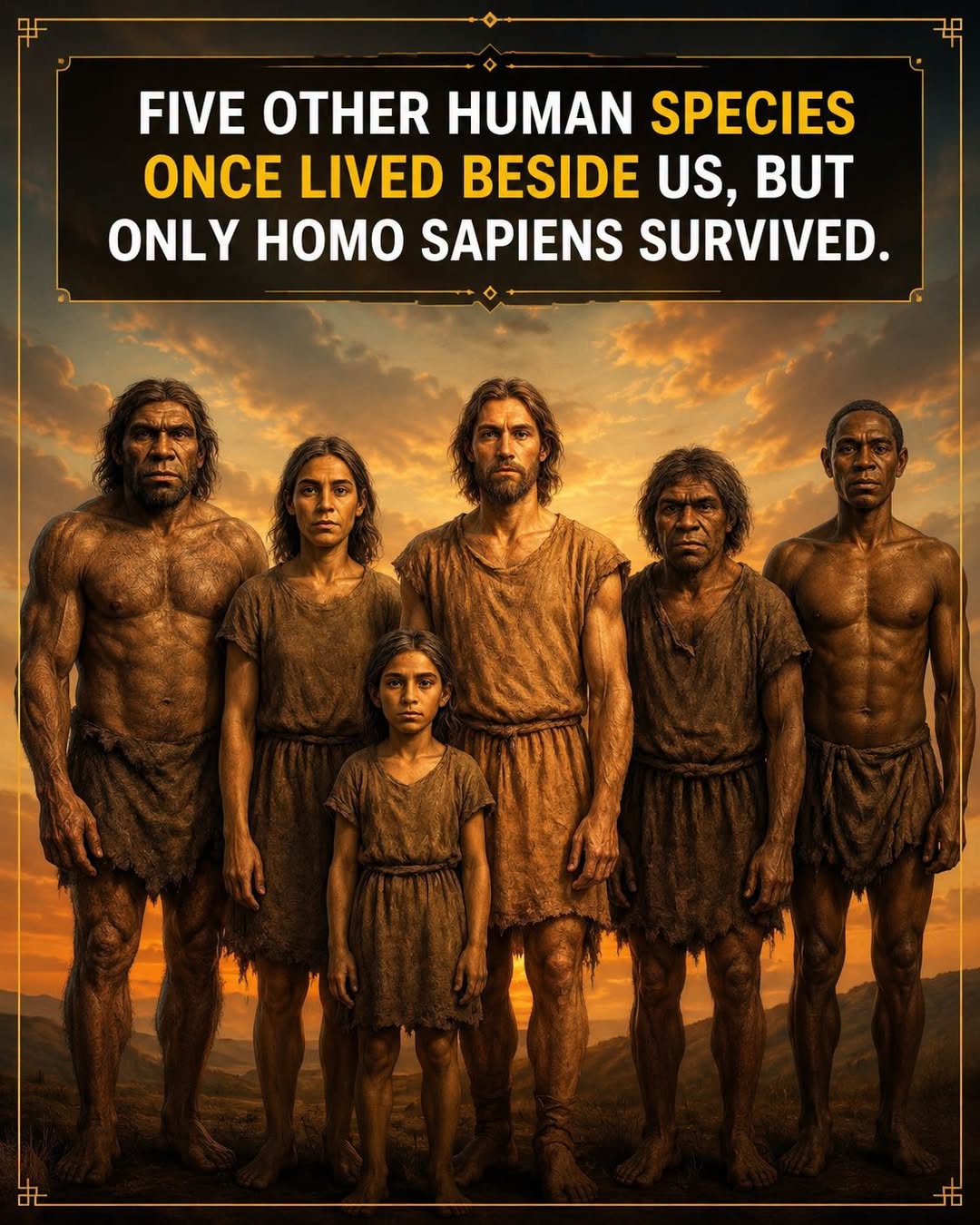
Long before skyscrapers, smartphones, and satellites, the Earth was home to more than one kind of human. For hundreds of thousands of years, Homo sapiens shared the planet with several other intelligent human species. They walked the same lands, hunted the same prey, and possibly even told stories by the fire.
Neanderthals were powerful survivors of Ice Age Europe—skilled hunters and toolmakers whose brains were just as large as ours. In the caves of Siberia, we find traces of Denisovans, a mysterious species known more from genetic clues than fossil remains. In Indonesia, Homo floresiensis, known as the “hobbit,” stunned scientists with their small size and unique anatomy. In Africa, Homo habilis earned its name as the first known toolmaker, while Homo erectus became the great traveller, spreading out of Africa and surviving longer than any other human species to date.
For thousands of years, these species coexisted with us. They may have exchanged knowledge, resources, and even genes. Then, slowly and silently, they vanished. Today, only Homo sapiens remain.
Why did we survive while the others faded into extinction? Some researchers suggest it was language that gave us an edge. Others point to social bonds, cooperation, or even luck. The truth is still unknown. But their legacy remains in our DNA and in the fragments of ancient skulls and tools that continue to rewrite human history.
We are not the first. We are simply the last. And their story is part of ours.
Fun Fact: Up to 2 percent of the DNA in non-African humans today comes from Neanderthals, showing that our ancestors interbred with them tens of thousands of years ago.
#MockingMerriment #PrehistoricLife #Denisovans #Paleontology #FossilDiscovery
#Neanderthals #Archaeology #HomoSapiens #AncientHumans #HumanEvolution
Leave a Reply
You must be logged in to post a comment.