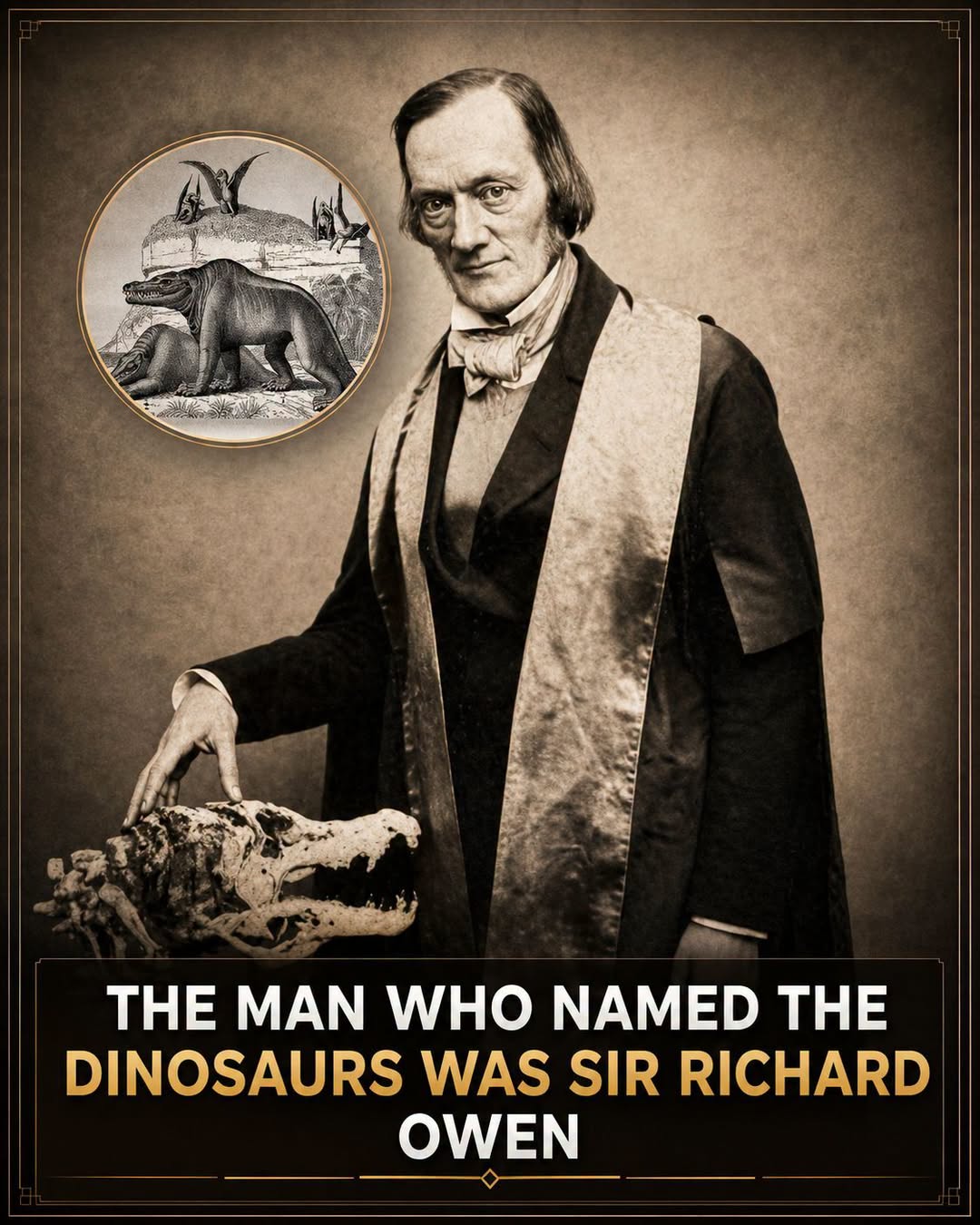
Few names are as important in the history of paleontology as Sir Richard Owen, the man who gave dinosaurs their very name. In 1841, Owen introduced the term “Dinosauria,” derived from the Greek words deinos—meaning “terrible”—and sauros—meaning “lizard.” This name captured the public imagination and gave identity to a whole new group of prehistoric reptiles unlike any living today.
While Owen was not the first to uncover dinosaur fossils, his key contribution was recognising that the fossilized bones of Megalosaurus, Iguanodon, and Hylaeosaurus shared unique characteristics that set them apart from modern reptiles. This insight allowed him to group these species together and define them as a distinct order of giant extinct reptiles. His work marked the birth of dinosaur science as a formal discipline.
Owen was more than just a namer of fossils. He was a passionate advocate for public science education and played a pivotal role in establishing the Natural History Museum in London, which remains one of the world’s leading institutions for the study and display of dinosaurs and other natural wonders. His influence helped shape how museums present prehistoric life and made science accessible to generations of visitors.
Despite controversies surrounding some of his views and rivalries with other scientists, Owen’s legacy endures in the widespread use of the word “dinosaur” and the foundation he laid for modern paleontology. Thanks to his vision, dinosaurs are not just fossils in the ground but icons of natural history that continue to inspire curiosity and discovery.
Fun Fact: The first three dinosaurs Owen grouped together—Megalosaurus, Iguanodon, and Hylaeosaurus—are often called the “founding dinosaurs” because they launched the study of Dinosauria as a scientific field.
#MockingMerriment
#NaturalHistoryMuseum #STEM #Paleontology #Dinosaurs #ScienceHistory #Dinosauria #RichardOwen #FossilDiscovery #AncientLife
Leave a Reply
You must be logged in to post a comment.