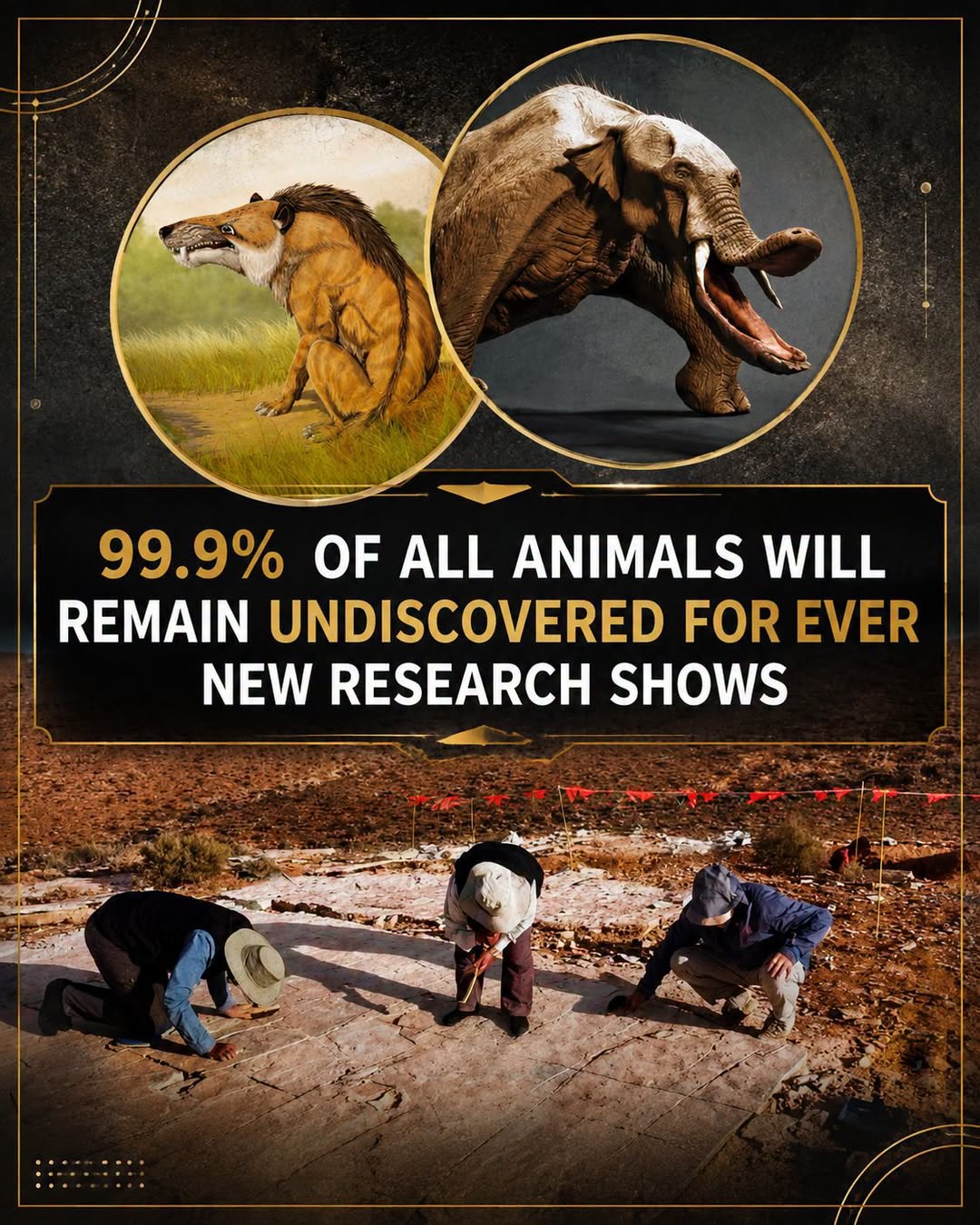
Fossils are often seen as windows into ancient life, but the truth is, they represent only the faintest whisper of Earth’s vast biological history. According to a groundbreaking study led by Dr Henrik Woolley, published in PLOS ONE (Feb 2024), fossilisation is an incredibly rare event that demands nearly perfect conditions. Most organisms that ever lived were lost to time, leaving no trace behind.
Fossils only form under very specific circumstances: rapid burial, low oxygen, and minimal disturbance. These conditions are typically found in calm settings such as riverbeds, lakes, or ocean floors—and even then, only a small number of remains survive long enough to mineralise into stone. LibreTexts (2024) confirms that fewer than 1 percent of all species that ever roamed the planet are known from the fossil record. In fact, that number may be far lower.
The overwhelming majority of creatures decomposed, were eaten, or eroded away before fossilisation could even begin. That means when we study ancient bones and imprints, we are not seeing a complete history but rather a scattered puzzle with most of its pieces missing.
This scarcity makes every new fossil find extraordinarily valuable. It also highlights how much of prehistoric life we may never uncover. From soft-bodied animals to early microbes, countless forms of life vanished without a trace. What we do have tells incredible stories, but they are only fragments of a much larger, untold tale.
Fun Fact: More than 99.9 percent of all species that ever lived are now extinct, and nearly all left behind no fossil record at all.
#MockingMerriment
#AncientLife #NaturalHistory
#PrehistoricLife #EarthHistory #Fossils #ScienceFacts #FossilRecord #Evolution #Paleontology
Leave a Reply
You must be logged in to post a comment.