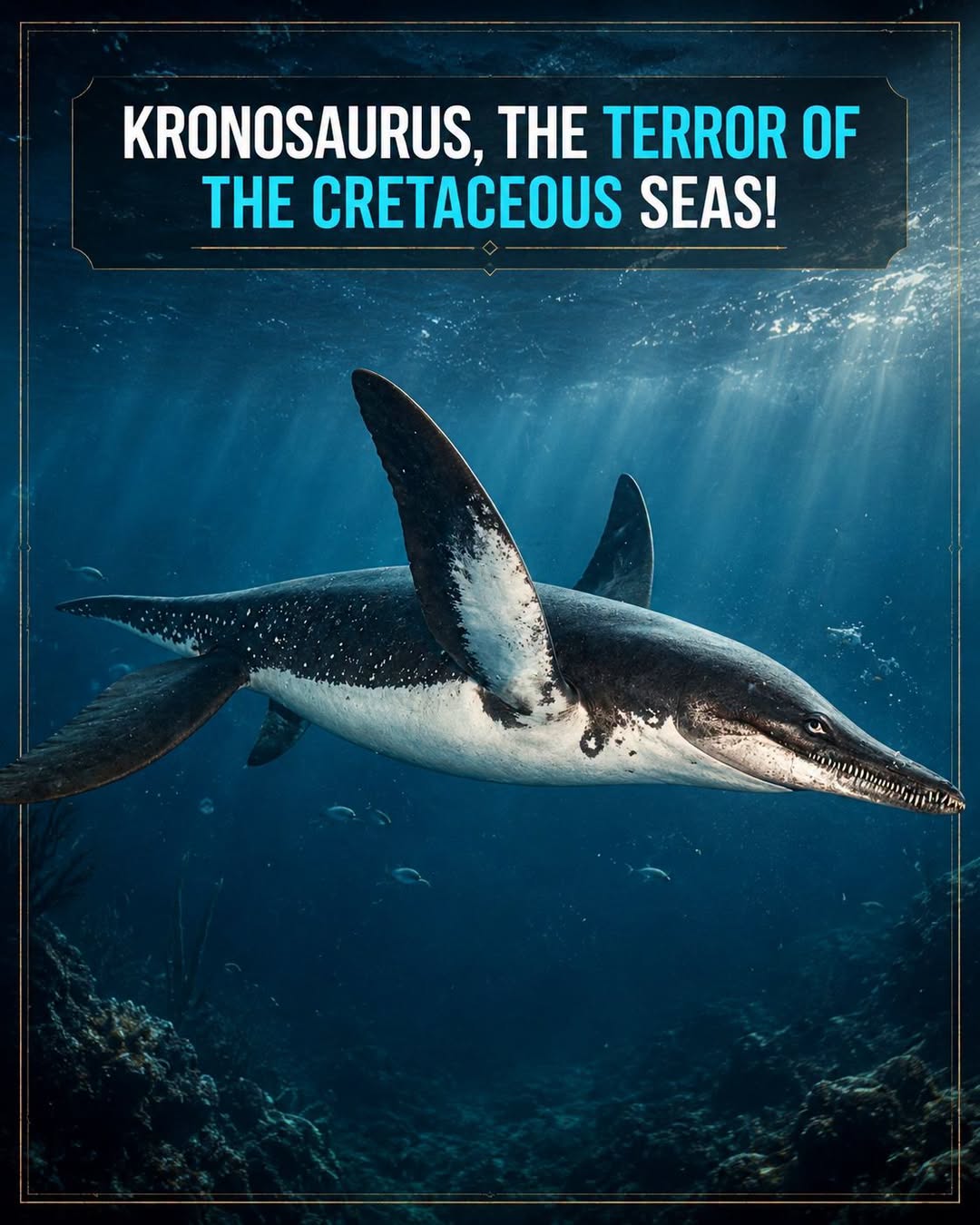
Kronosaurus wasn’t a dinosaur, but that didn’t stop it from dominating the oceans like a true apex predator. Belonging to the pliosaur group of marine reptiles, this beast stretched over 10 metres in length and was built for raw power. Its massive skull housed dozens of conical teeth, each designed to crush shells and pierce flesh with ease. With a bite strong enough to splinter bone and flippers that propelled it like a high-speed submarine, Kronosaurus hunted with brutal efficiency.
This predator patrolled the shallow inland seas of what is now Australia and South America around 100 million years ago. Its prey included large fish, ammonites, marine turtles, and even other marine reptiles. Kronosaurus didn’t need stealth or cunning. It relied on speed, strength, and size to overwhelm anything in its path. Its flippers, structured like underwater wings, gave it surprising agility for such a bulky creature. It could make sharp turns to chase prey, burst forward in ambush, or drag smaller rivals into the depths.
The name Kronosaurus comes from Cronus, the Titan from Greek mythology who devoured his own children. The comparison is fitting. Kronosaurus was not just another marine reptile. It was a sea monster of epic proportions, unmatched in its time.
Fossils of Kronosaurus were first discovered in Queensland, Australia, in the early 20th century. Since then, paleontologists have pieced together its terrifying profile using a combination of bones, tooth impressions, and modern reconstruction techniques. While debates about its exact length continue, one thing is certain: Kronosaurus was among the deadliest creatures to ever swim Earth’s oceans.
Fun Fact: A mounted skeleton of Kronosaurus was famously displayed at Harvard University’s Museum of Comparative Zoology, but researchers later discovered that the reconstruction included too many vertebrae, making the creature look longer than it actually was.
#MockingMerriment
#PrehistoricLife #Pliosaur #Kronosaurus #ApexPredator
#CretaceousPeriod #FossilDiscovery #AncientOceans #Paleontology #MarineReptiles
Leave a Reply
You must be logged in to post a comment.