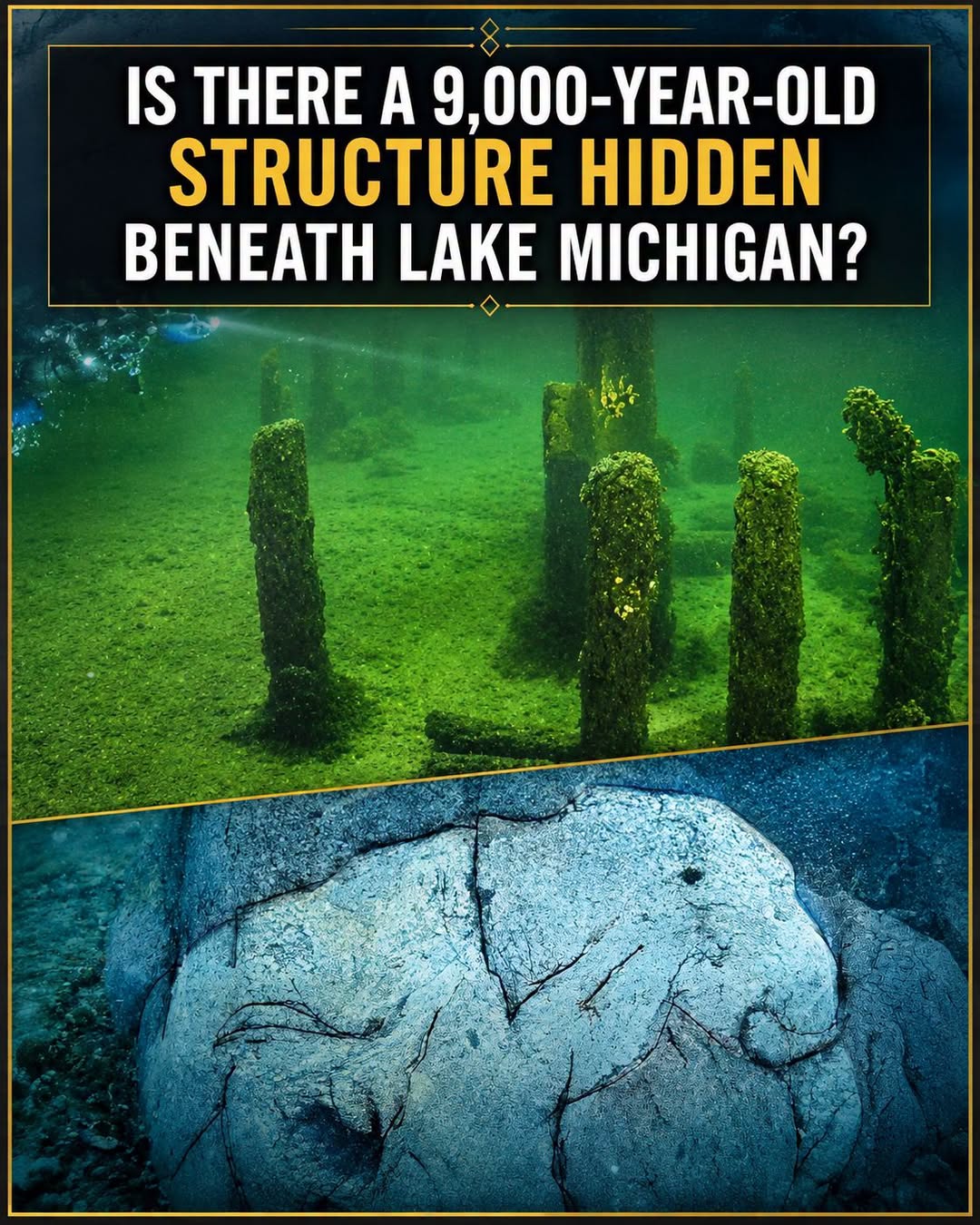
In 2007, a team of underwater archaeologists scanning Lake Michigan made a discovery that continues to stir debate and fascination. At a depth of about 40 feet, they found a series of stone formations resembling ancient man-made structures, along with a boulder that appeared to have a carved image of a mastodon—an Ice Age mammal that went extinct nearly 10,000 years ago. This finding, located in Grand Traverse Bay, has sparked questions about what lies beneath the surface of North America’s Great Lakes.
Could it be evidence of a prehistoric civilization, long forgotten and buried beneath the waves after the last Ice Age? Or are these formations simply natural arrangements altered slightly by early hunter-gatherers? The supposed mastodon carving adds to the mystery. If verified, it would suggest the site predates the pyramids by several millennia, and may offer insight into early North American cultures. Some researchers believe it could have been part of a ceremonial site or a hunting ground marker used by Paleo-Indians who once roamed the area during the time when much of Michigan was dry land.
Scientific analysis is still ongoing, and experts caution that many underwater rock formations can appear artificial due to natural erosion. However, the potential of this site has led to growing interest among geologists, archaeologists, and historians who believe it could hold clues to human life in North America before recorded history.
Fun Fact: Mastodons, unlike mammoths, were browsers instead of grazers and had distinctly shaped molars to chew leaves and twigs. Their extinction roughly 10,000 years ago marked the end of one of North America’s most iconic megafauna species.
#MockingMerriment
#Paleontology #FossilDiscovery #LakeMichiganMystery #Mastodon #PrehistoricLife #AncientMysteries #HumanHistory
#UnderwaterArchaeology #IceAge
Leave a Reply
You must be logged in to post a comment.