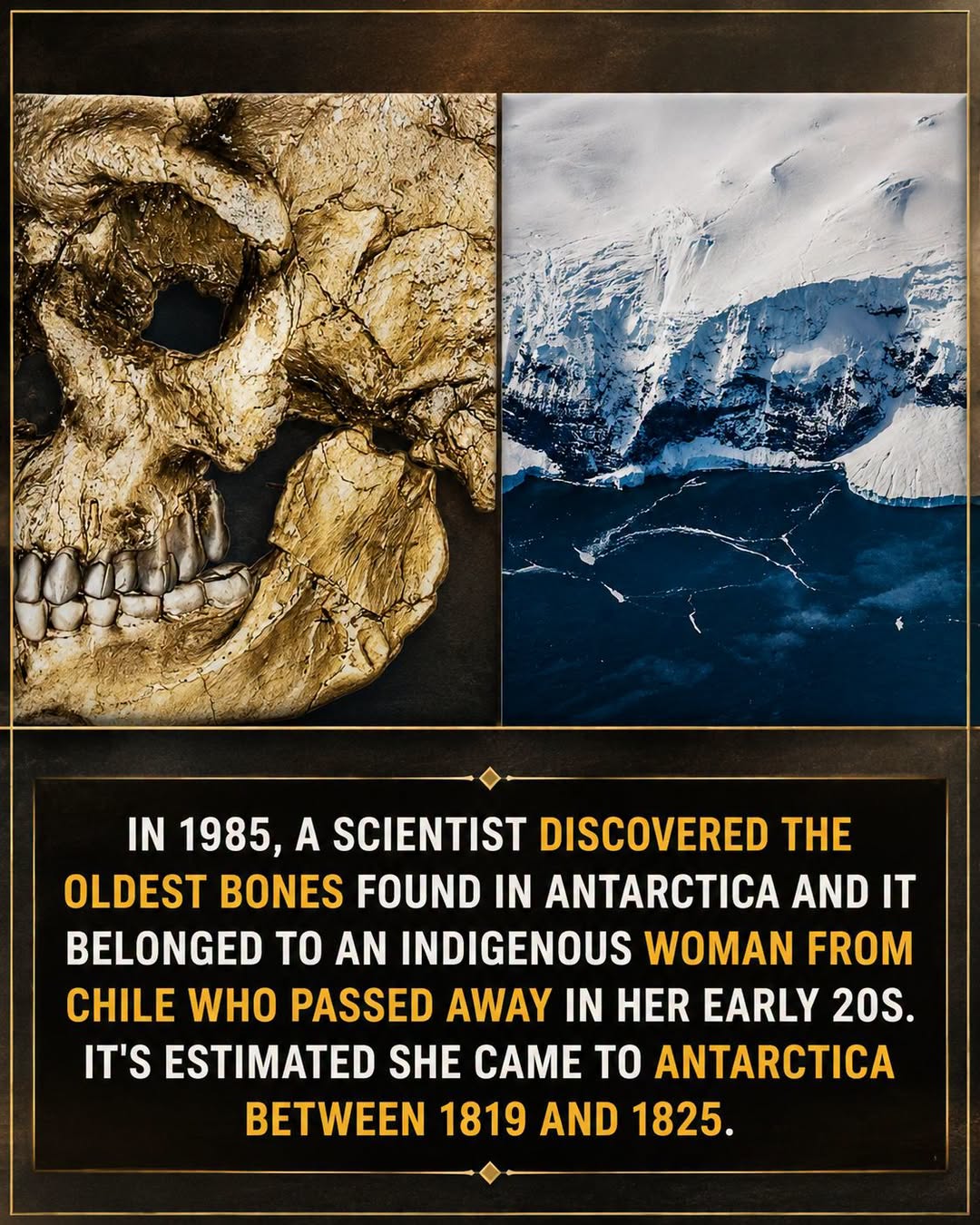
In 1985, on the icy shores of Yamana Beach at Cape Shirreff in Antarctica’s South Shetland Islands, Chilean biologist Dr. Daniel Torres uncovered a discovery that stunned the scientific world. A human skull and femur were found half-buried in the frozen ground, later identified as belonging to a young Indigenous woman from southern Chile. Estimated to have died between 1819 and 1825 at around 21 years old, these remains are now considered the oldest known human bones ever discovered on the Antarctic continent.
The young woman was likely a mestizo from the southern channels of Chile, possibly of Yaghan or Kawésqar heritage. How she ended up on the harsh, remote coastline of Antarctica remains a mystery. Historical records do not mention women aboard sealing vessels during that time, making her presence in such a forbidding place all the more remarkable. It is speculated that she may have traveled aboard a sealing ship, intentionally or otherwise, during a period when the first landings on the Antarctic Peninsula were just beginning.
This discovery not only sheds light on early human activity in Antarctica but may also play a critical role in the future. As the Antarctic Treaty is set for review in 2048, findings like this could be considered in geopolitical discussions surrounding historical claims and human presence on the continent.
The skull and femur provide a rare, personal glimpse into the early human footprint on a land we often think of as untouched. They represent a forgotten chapter of exploration, migration, and possibly survival in one of Earth’s harshest environments.
Fun Fact: The remains were so well-preserved by the Antarctic cold that forensic analysis was able to determine her approximate age, ancestry, and even signs of past trauma.
#MockingMerriment
#AncientHumans #Paleontology #HumanHistory #Yaghan #Archaeology #PrehistoricLife #Kawésqar #AntarcticaDiscovery
Leave a Reply
You must be logged in to post a comment.