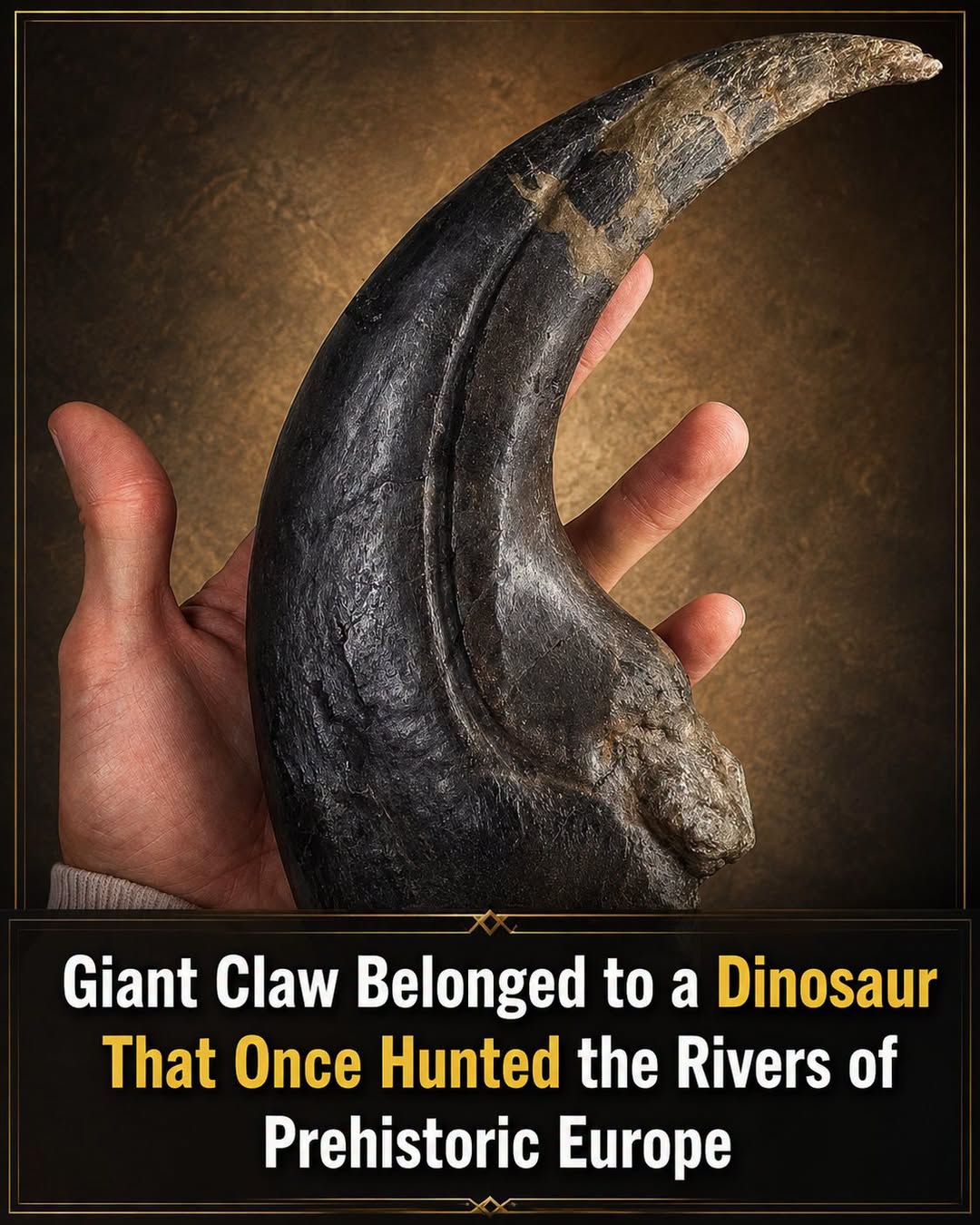
You’re looking at the real, fossilised thumb claw of Baryonyx, one of the most unique predators of the Early Cretaceous period. Held here for scale, this incredible relic is a rare and priceless glimpse into the life of a dinosaur that once dominated the waterways of ancient England. This is the only known original thumb claw of Baryonyx walkeri, a name that has become legendary among palaeontologists and dinosaur lovers alike.
Discovered in January 1983 by amateur fossil hunter William Walker in a clay pit in Surrey, England, Baryonyx was unlike any other theropod known at the time. With its long, crocodile-like snout, cone-shaped teeth, and this massive, curved thumb claw measuring over 30 cm, it was clearly built for a semi-aquatic lifestyle. Scientists believe it hunted fish, using its claws and jaws to snatch prey from the water much like modern-day grizzly bears.
Standing over 30 feet long and weighing around 1.2 tonnes, Baryonyx is one of the largest theropods ever discovered in Europe. Its discovery changed how we understood predatory dinosaurs, especially those that may have adapted to aquatic environments. The claw itself is a key part of that story, revealing how powerful and specialised this dinosaur truly was.
A replica of this very claw was taken to the world premiere of Jurassic World Rebirth, and for good reason. Baryonyx has earned a rightful place in both science and pop culture as a fan-favourite dinosaur that continues to fascinate experts and moviegoers alike.
Fun Fact: When Baryonyx was first discovered, it was one of the first known fish-eating dinosaurs, marking a major shift in how we thought theropods hunted.
#MockingMerriment #JurassicWorld #FossilDiscovery #Baryonyx #PrehistoricLife #Paleontology #Dinosaurs #DinosaurFacts #CretaceousPeriod
Leave a Reply
You must be logged in to post a comment.