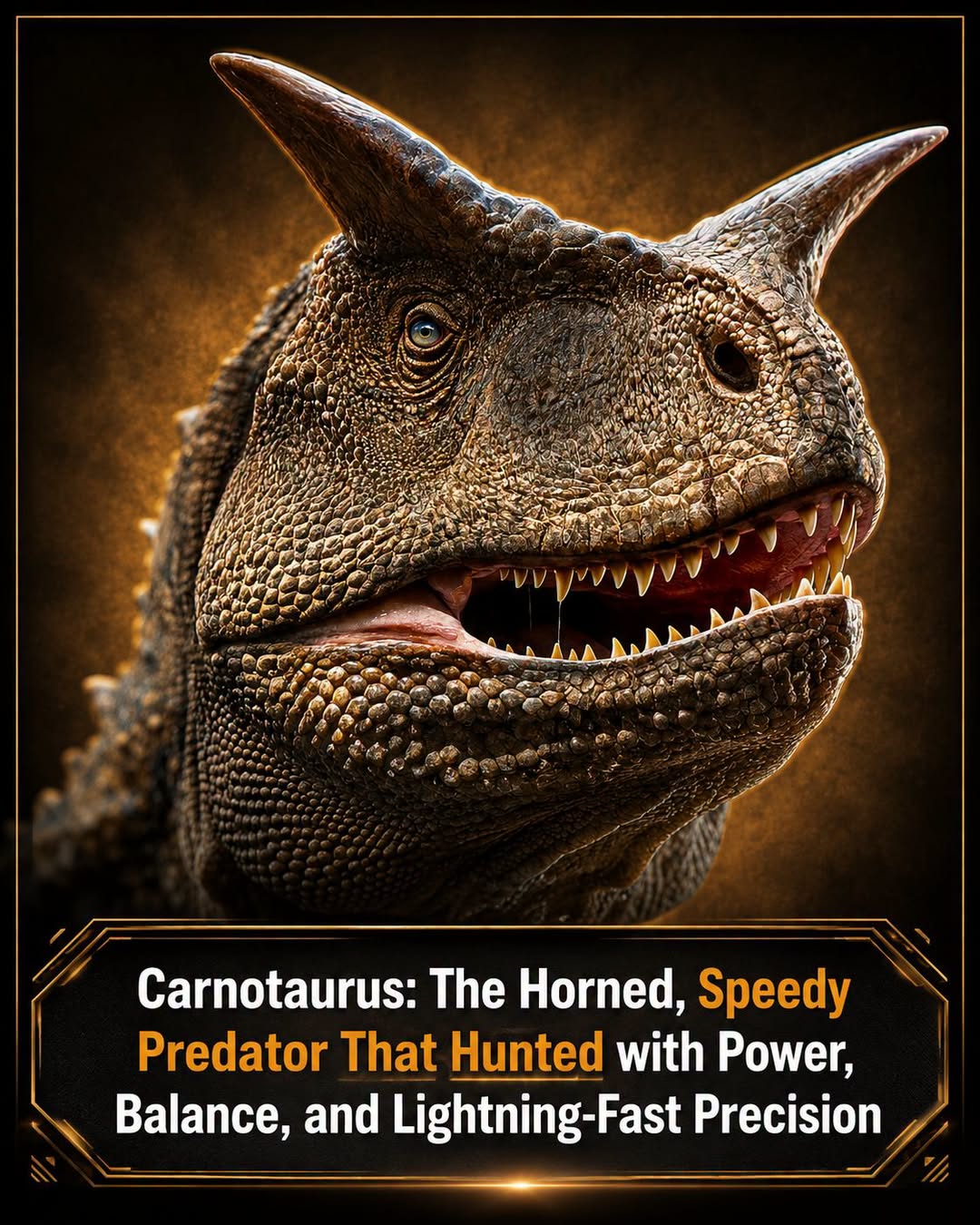
A sleek shadow streaked across Late Cretaceous Patagonia, its head crowned with thick, forward‑pointing horns and its body built for speed. Meet Carnotaurus sastrei, one of the strangest and swiftest carnivorous dinosaurs ever discovered. Stretching 7.5–9 metres from snout to tail and tipping the scales at up to 2.5 tonnes, this “meat‑eating bull” combined raw power with surprising agility, dominating the open floodplains of South America roughly 70 million years ago.
Carnotaurus stood out even among fellow theropods. Its skull was short yet deep, packed with sharp, recurved teeth ideal for gripping struggling prey. The creature’s namesake horns, made of solid bone, were likely used in ritual combat or visual displays, helping individuals compete for territory or mates. In stark contrast, its arms were so reduced that they were practically vestigial, each limb shorter than a human forearm and lacking functional claws. Instead of grappling with forelimbs, Carnotaurus relied on stout neck muscles and an exceptionally stiff, muscular tail, which worked together to generate explosive bursts of speed. Biomechanical studies suggest it could exceed 48 kilometres per hour, making it one of the fastest large theropods known.
Fossils unearthed in 1984 by Argentine palaeontologist José Bonaparte show patches of pebbly skin impressions, revealing a coat of tight, non‑overlapping scales. No feathers have been found, hinting that Carnotaurus retained a reptilian hide rather than the plumage seen in many cousins. Such exceptional preservation also lets scientists model how this dinosaur balanced its massive head while sprinting, an engineering feat still inspiring biomechanical research today.
Fun Fact: CT scans of the Carnotaurus skull reveal unusually large inner‑ear canals, suggesting an excellent sense of balance that helped stabilise its vision during high‑speed chases.
#MockingMerriment
#Carnotaurus #Cretaceous #DinosaurFacts #Paleontology #Theropods #PrehistoricLife #Dinosaurs
Leave a Reply
You must be logged in to post a comment.