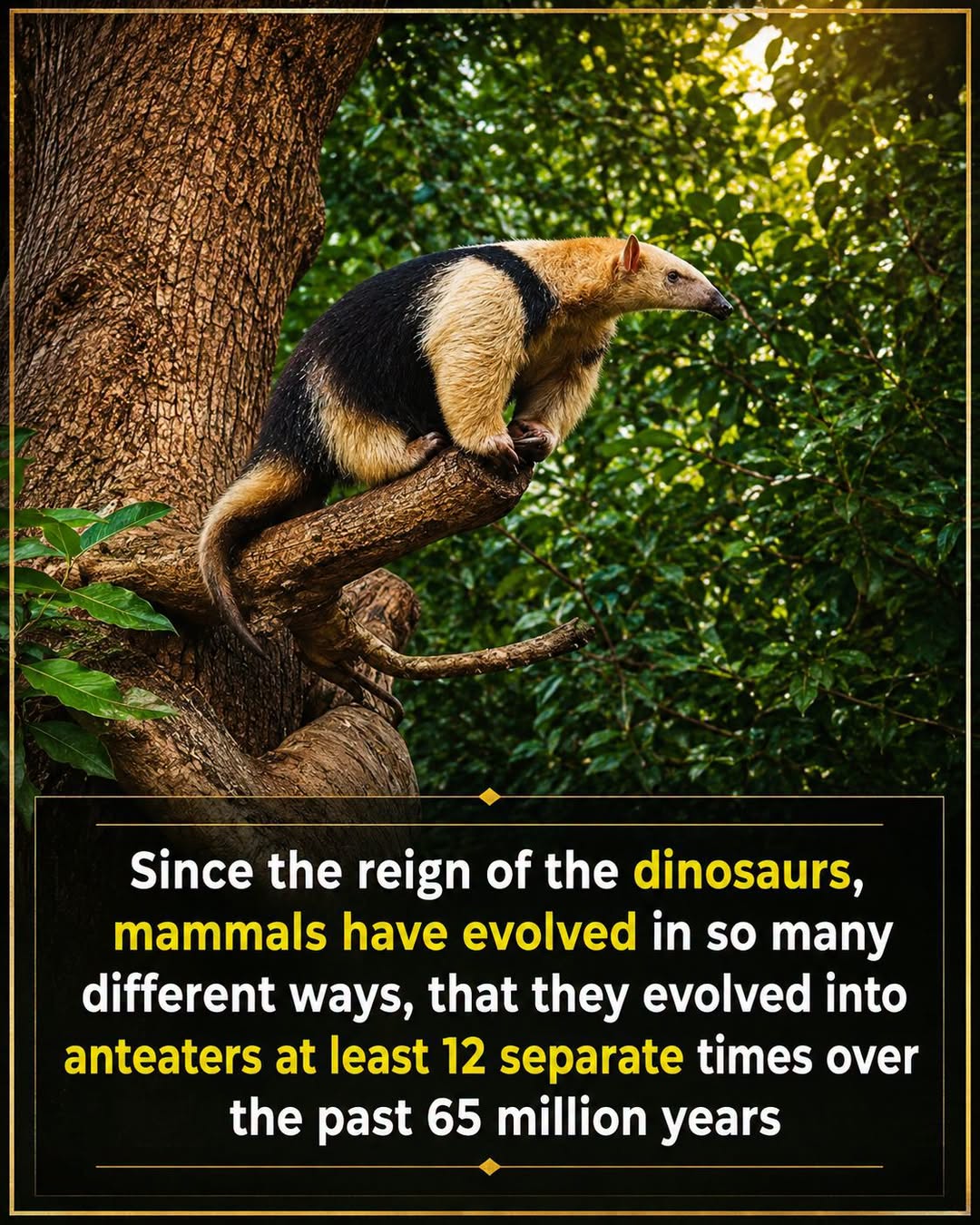
For some mammals, survival meant becoming insect specialists in a world crawling with opportunity. Over the last 65 million years, at least a dozen different mammal species have independently evolved a highly specialised diet focused almost entirely on ants and termites. This evolutionary path, known as myrmecophagy, didn’t happen once. It happened again and again, across separate lineages that developed remarkably similar traits to exploit the same food source.
After the extinction of the dinosaurs, ants and termites exploded in number and spread across nearly every ecosystem. For mammals able to crack the code, these insects became a reliable, widespread meal. Evolution responded with powerful claws for digging into nests, narrow snouts, and incredibly long, sticky tongues perfect for sweeping up thousands of tiny prey. From anteaters in South America to pangolins in Africa and Asia, and aardvarks in Africa, nature kept reinventing the same basic blueprint.
Although over 200 mammal species include ants or termites in their diet, only about 20 are true specialists—relying almost entirely on these insects. These mammals are some of the most extreme examples of evolutionary adaptation. Their low-calorie prey means they need to eat constantly, often consuming tens of thousands of ants or termites per day. Once a species commits to this specialised diet, the evolutionary trade-off usually makes it difficult to revert to more general feeding strategies. In fact, most myrmecophagous lineages tend to remain narrow and undiversified over time.
Yet the gamble may be paying off. Today, ants and termites outweigh all wild mammals on Earth combined. As climate change reshapes ecosystems, these insectivores may find new advantages in their specialised niche, thriving where other species struggle.
Fun Fact: Pangolins have no teeth and rely entirely on their muscular stomachs to grind up ants and termites, using swallowed stones and keratinous spines lining their stomach wall.
#MockingMerriment #Evolution #WildlifeBiology
#Adaptation #Myrmecophagy #PrehistoricLife #Paleontology #NaturalHistory #Insectivores #Mammals
Leave a Reply
You must be logged in to post a comment.