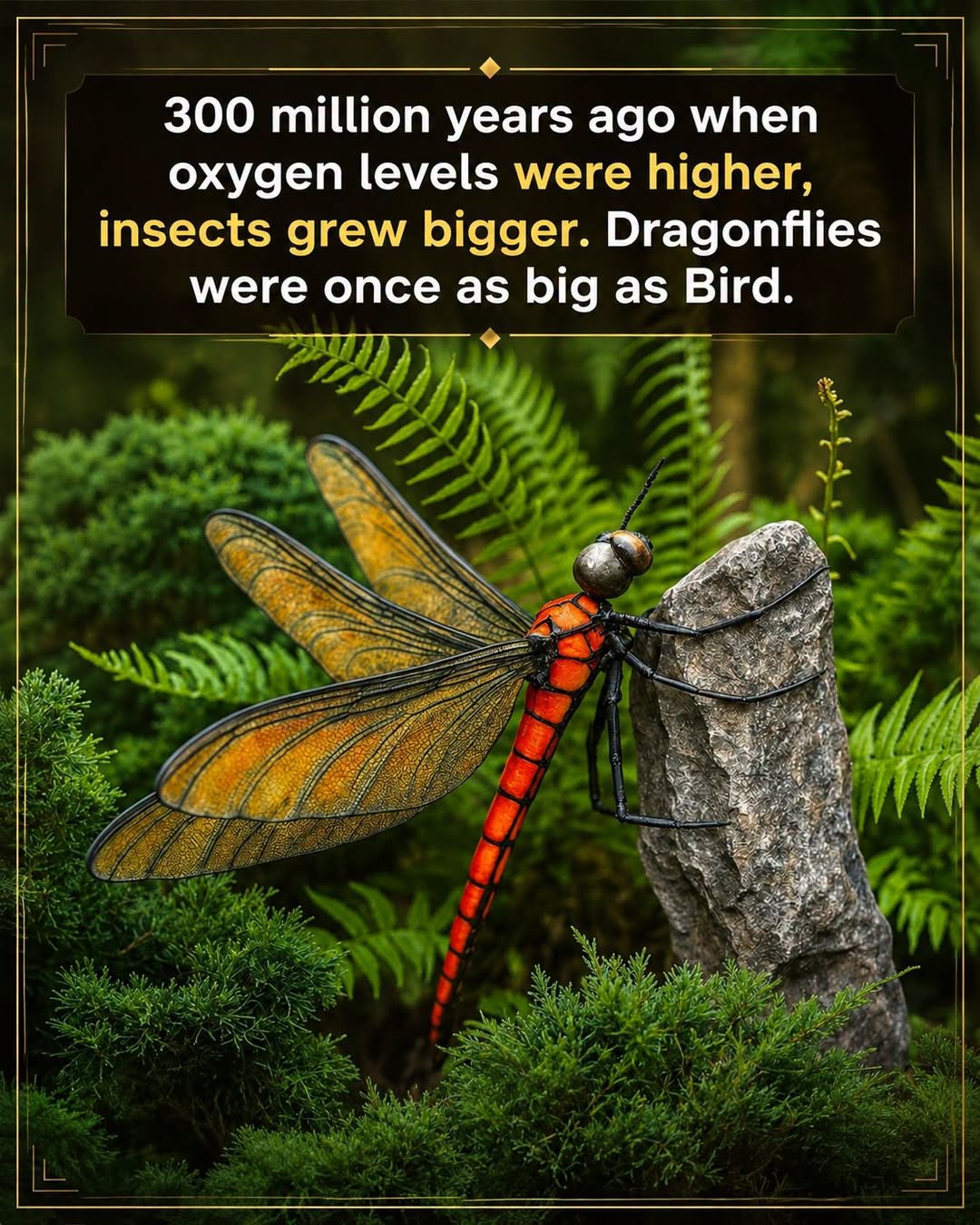
Three hundred million years ago, the skies were ruled by giants with wings. In an ancient world bursting with oxygen, insects grew to astonishing sizes, and one of the most legendary among them was Meganeura. This dragonfly-like predator soared through prehistoric forests with wingspans stretching over two feet, rivaling the size of modern birds.
The Carboniferous period was a time of thick, swampy forests and towering ferns. Oxygen levels in Earth’s atmosphere reached up to 35 percent, compared to today’s 21 percent. This rich oxygen environment allowed arthropods to evolve far beyond their current limits. Meganeura, with its enormous wings and agile flight, was one of the dominant aerial hunters of its time. It preyed on smaller insects and possibly even small amphibians, using its speed and sharp mandibles to maintain control over the skies.
But Meganeura was not alone. Millipedes the size of alligators and centipedes as long as a child also thrived in this oxygen-rich world. These massive forms of life were the direct result of environmental conditions that no longer exist. As oxygen levels declined over millions of years, so too did the size of these creatures. Eventually, insects returned to the smaller forms we recognise today.
Understanding creatures like Meganeura helps scientists learn more about the connection between atmospheric conditions and animal evolution. It also shows how Earth’s ever-changing climate can shape life in ways that seem unbelievable today.
Fun Fact: Meganeura lived around 100 million years before the first dinosaurs ever appeared. These insects were the original rulers of the skies.
#MockingMerriment #AncientInsects #Meganeura #GiantInsects #Evolution #EarthHistory #PrehistoricLife #FossilDiscovery #Paleontology #CarboniferousPeriod
Leave a Reply
You must be logged in to post a comment.