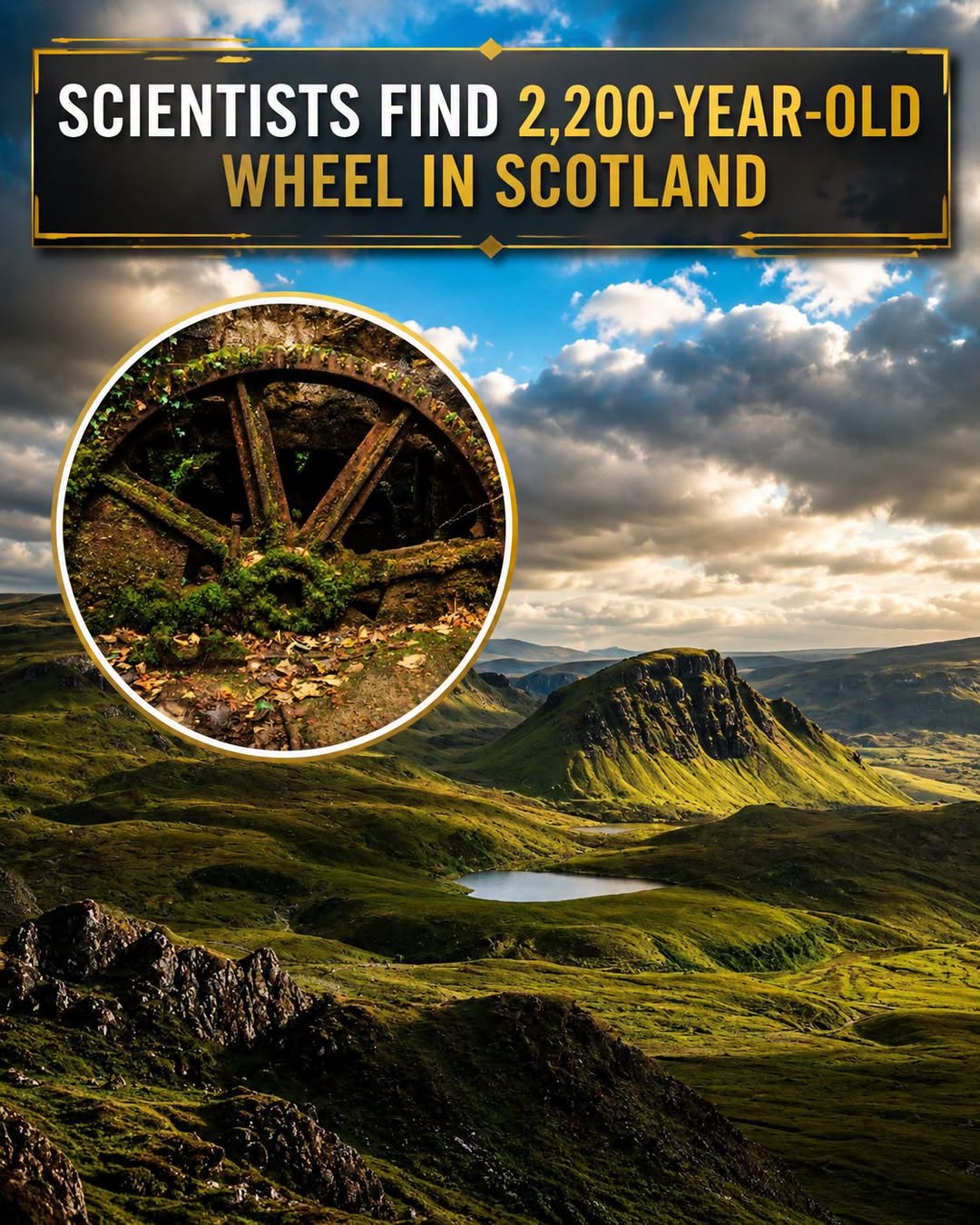
During the construction of a golf course near Inverness, archaeologists uncovered something completely unexpected: a 2,200-year-old Iron Age ceremonial wheel, remarkably preserved in the soil for over two millennia. This rare artefact was part of a chariot burial—a ritual practice often reserved for individuals of high rank—suggesting that someone of great importance was once laid to rest at this site.
The iron wheel is an extraordinary find in British archaeology, especially in the Highlands where such discoveries are rare. Its presence offers powerful clues about the social structures, warfare practices, and technological sophistication of ancient Celtic communities in northern Scotland. Chariot burials were symbolic events, meant to display status and power, and the inclusion of a full wheel reinforces the significance of the person buried there.
Experts believe the wheel dates back to the late Iron Age, around 200 BC, a time when tribal societies ruled the region and craftsmanship in metal was becoming increasingly advanced. The wheel’s construction reflects not only high levels of ironworking skill, but also strong cultural links to continental Europe, where similar burial customs were more common.
This discovery is shifting historical narratives about the Highland clans of the past. It suggests that even in remote parts of Scotland, elite individuals and complex traditions existed, challenging long-held assumptions about life in Iron Age Britain. As analysis continues, the site may reveal more treasures and further unravel the mysteries of ancient Celtic life.
Fun Fact: Although wooden parts of the chariot have decayed over time, iron components like the wheel and fittings have survived, offering rare physical evidence of Iron Age transport and warfare.
#MockingMerriment
#PrehistoricScotland #HumanHistory #Archaeology #IronAge #ChariotBurial #FossilDiscovery #AncientArtifacts
#AncientHistory #CelticCulture
Leave a Reply
You must be logged in to post a comment.