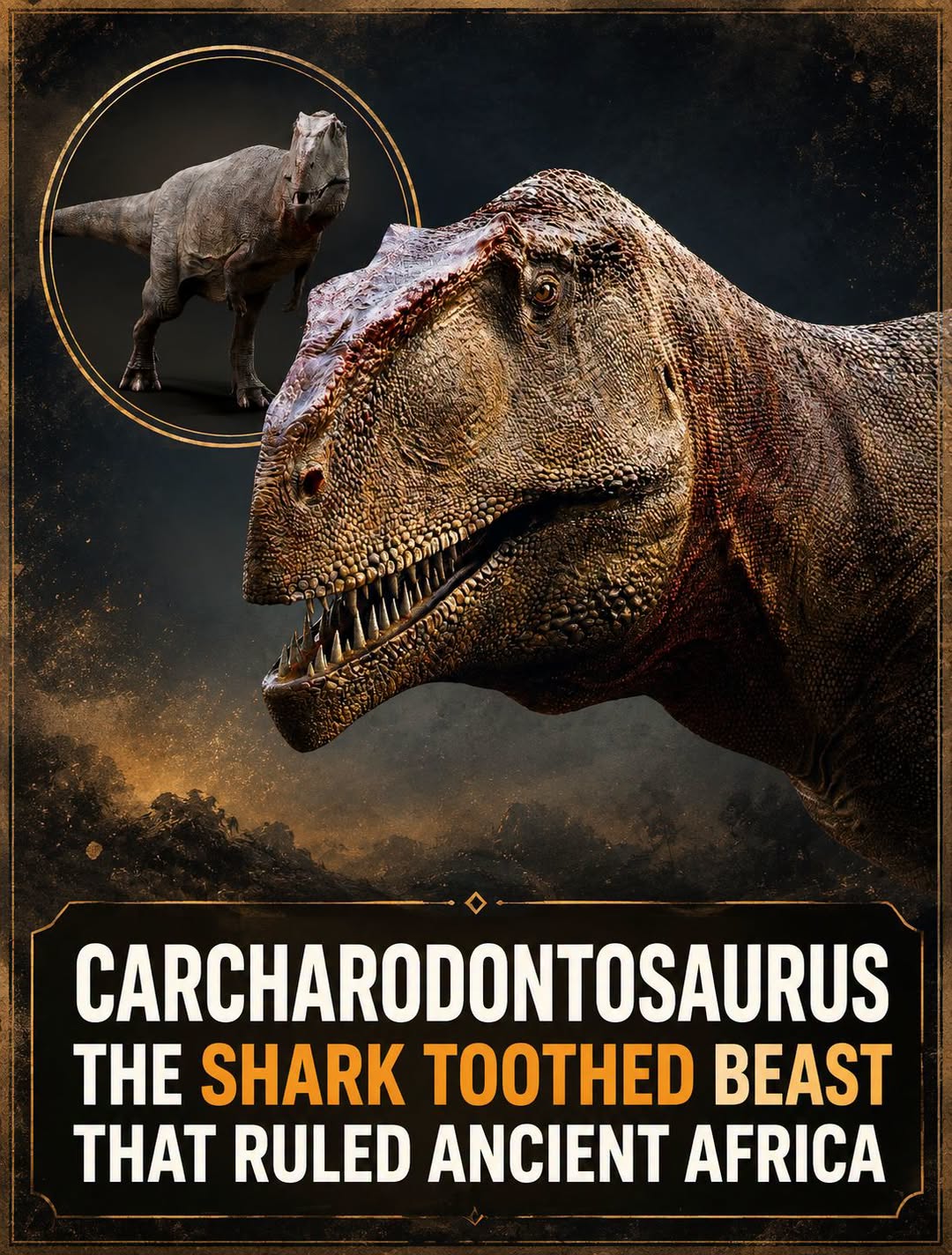
Meet Carcharodontosaurus, one of the most fearsome predators to ever walk the Earth. Known as the “shark-toothed lizard,” this massive carnivorous theropod roamed Northwest Africa around 100 to 94 million years ago, during the Cenomanian age of the Cretaceous period. With serrated teeth similar to a great white shark and a skull nearly as long as a human adult, it was one of the largest land predators ever discovered.
The story of Carcharodontosaurus begins with a mystery. In the early 20th century, two fossilised teeth were found in Algeria and initially identified as belonging to Megalosaurus saharicus by French paleontologists Charles Depéret and Justin Savornin. But it wasn’t until 1914, during an expedition to Egypt led by German paleontologist Ernst Stromer, that more fossil evidence came to light. Stromer waited until 1931 to publish his findings, and with that, the newly recognised genus Carcharodontosaurus was officially named, with C. saharicus as its type species.
This apex predator was a true giant, likely reaching lengths of 12 to 13 metres and weighing several tons. Its powerful jaws were lined with blade-like teeth ideal for slicing through flesh—perfect for hunting large herbivorous dinosaurs like Ouranosaurus and Paralititan. Despite its size and strength, much of what we know comes from fragmentary remains, as many original fossils were tragically destroyed during World War II bombings in Munich. Still, modern discoveries have helped reconstruct this terrifying hunter’s appearance and behaviour.
Carcharodontosaurus belonged to the Carcharodontosauridae family, a group of massive theropods related to Giganotosaurus and Mapusaurus, showing that colossal carnivores thrived well beyond North America.
Fun Fact: Its teeth could grow up to 8 inches long, with fine serrations that gave them a slicing ability similar to modern shark teeth.
#MockingMerriment
#Paleontology #Theropods #PrehistoricLife #Cretaceous #DinosaurFacts #Carcharodontosaurus
Leave a Reply
You must be logged in to post a comment.