My cat is the funniest person I know
Blog
-
1783639720ultramarineyellow38
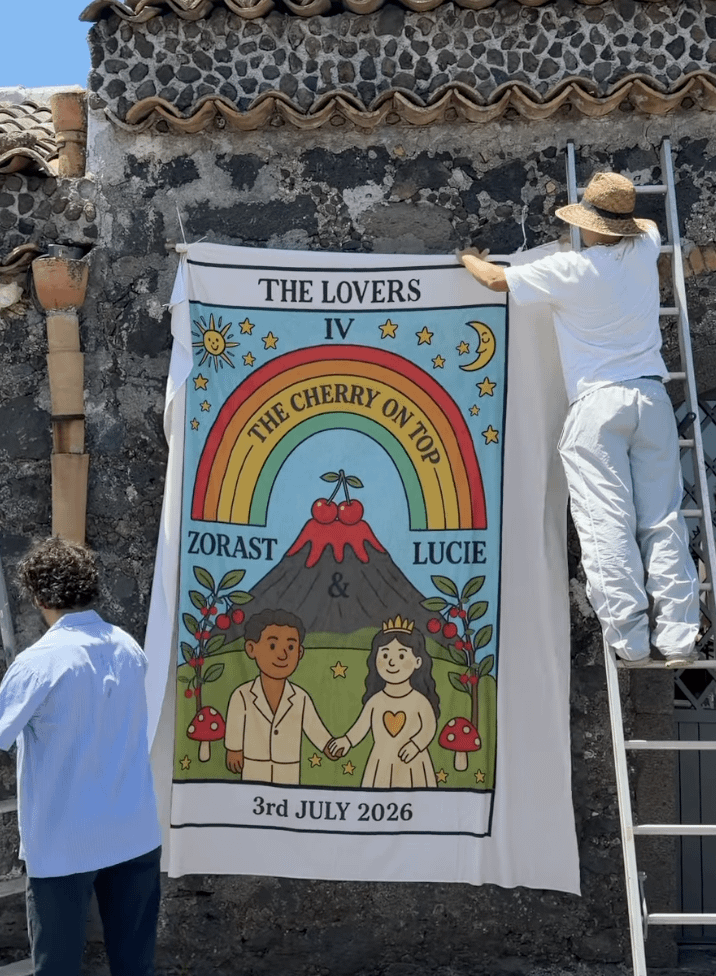
Besides the AI style on the character's faces, the font is reminiscent of AI-generated posts I see on Linkedin lol. The woman has 3 fingers on one hand but I'm not sure it matters since it's a cartoony drawing.
-

1783240990Background-World-5532
- The Jump (Projectile Motion)
• The Start: Mario jumps at an angle of (alpha) to clear a blocked path or hazard (indicated by the crossed-out arrow X).
• The Path: He follows a curved, parabolic path through the air to land on the enemy.
- The Impact
• Mario lands directly on the Koopa Troopa, defeating the enemy and leaving only its shell behind.
- The Formula ( s ÷ x = a)
• Rearranged, this formula is: s = ax
•This represents the distance or displacement (s) the shell will travel based on its acceleration/friction (a) over a given position (x).
- The Final Result
• The Koopa turns into a shell, and its specific physical size or height is measured and labeled as Xm.
Is there anything wrong with the answer ?
-
MockingMerriment1784380481
Archaeologists in northern France have uncovered what is now considered the oldest known human fingerprint ever found. Pressed into ancient clay, the print is believed to have been left by a Neanderthal child between the ages of 7 and 10. The impression, found in the La Roche-Cotard cave system near the Loire River, offers a hauntingly intimate connection to a young individual who lived tens of thousands of years ago.
This isn’t just a fossil or a tool. It is a human mark. A quiet moment that may have been the result of a child idly pressing their finger into soft clay while playing or perhaps helping shape something as part of a communal task. While Neanderthals are often depicted as brutish or primitive, discoveries like this gently challenge that image. They remind us that these early humans expressed curiosity, creativity, and tenderness in ways not so different from our own.
The clay fingerprint was preserved in the cool, stable environment of the cave—a rare survival that speaks to both the geological conditions and the quiet presence of human life in that region. The site has long been of interest due to its Mousterian stone tools, which were commonly used by Neanderthals. But this latest find adds a personal, humanising layer to the archaeological record.
Far from being merely a survival-driven species, Neanderthals made symbolic objects, buried their dead, and now, we know, they left behind the smallest but most powerful trace of humanity—a fingerprint.
Fun Fact: Fingerprints are unique to individuals, meaning this Neanderthal child’s print is one of a kind in all of history. No one before or since has had the same exact pattern.
#MockingMerriment
#Paleontology #FossilDiscovery #Neanderthals #HumanHistory #AncientHumans #Archaeology #HumanEvolution #PrehistoricLife #LaRocheCotard