Europe’s 2027 Phone Battery Rules Mark a Major Shift
Beginning on February 18, 2027, the European Union will implement new battery regulations designed to make smartphones more durable, repairable, and environmentally sustainable. However, contrary to some viral claims, the rules do not require every phone to have a removable back cover or a snap-out battery.
Instead, smartphones sold in the EU must either feature batteries that users can replace with commercially available tools or meet strict battery durability standards. To qualify for an exemption, a device must retain at least 83% of its original battery capacity after 500 charge cycles and 80% after 1,000 charge cycles, while also maintaining certified dust and water resistance. Many current flagship smartphones, including recent iPhone models, are expected to meet these requirements.
The regulation is part of the EU’s broader Right to Repair initiative, which aims to reduce electronic waste, extend the lifespan of devices, and make battery replacements more accessible so consumers do not have to replace their phones as frequently.
Would you prefer a phone with a user-replaceable battery, or one with a battery designed to last much longer before needing replacement?
Author: Kai93
-

BeePetLove1784242585
-

BeePetLove1784231422
JD Vance is urging Senate Republicans to stop relying on what he described as “procedural obstacles,” eliminate the filibuster, and pass the SAVE America Act. His message to fellow Republicans is clear: stop delaying and get the legislation passed.
-

BeePetLove1784221277
America’s top health official is advocating for a nationwide ban on lab-grown meat, arguing that it is a risky corporate experiment that should not become part of the country’s food supply.
Robert F. Kennedy Jr., serving as Secretary of Health and Human Services, has expressed strong opposition to cultivated meat. He has directed the FDA to strengthen oversight of these products and has voiced support for state-level bans, arguing that cell-cultured meat is an unproven, ultra-processed food whose long-term health effects remain uncertain.
Supporters of Kennedy’s position say a cautious approach is warranted. They argue that the lab-grown meat industry could concentrate control of the food supply in the hands of a small number of large corporations and investors. Under Kennedy’s leadership, HHS and the USDA have also shifted federal dietary guidelines to place greater emphasis on traditional livestock products and full-fat dairy as part of a conventional diet.
Critics, however, argue that cultivated meat has the potential to reduce factory farming, lower greenhouse gas emissions, and help meet the food demands of a growing global population more efficiently than traditional meat production. They contend that the central question is whether Kennedy’s actions are intended to protect public health or to preserve the existing food system from emerging competition. -
BeePetLove1784210603
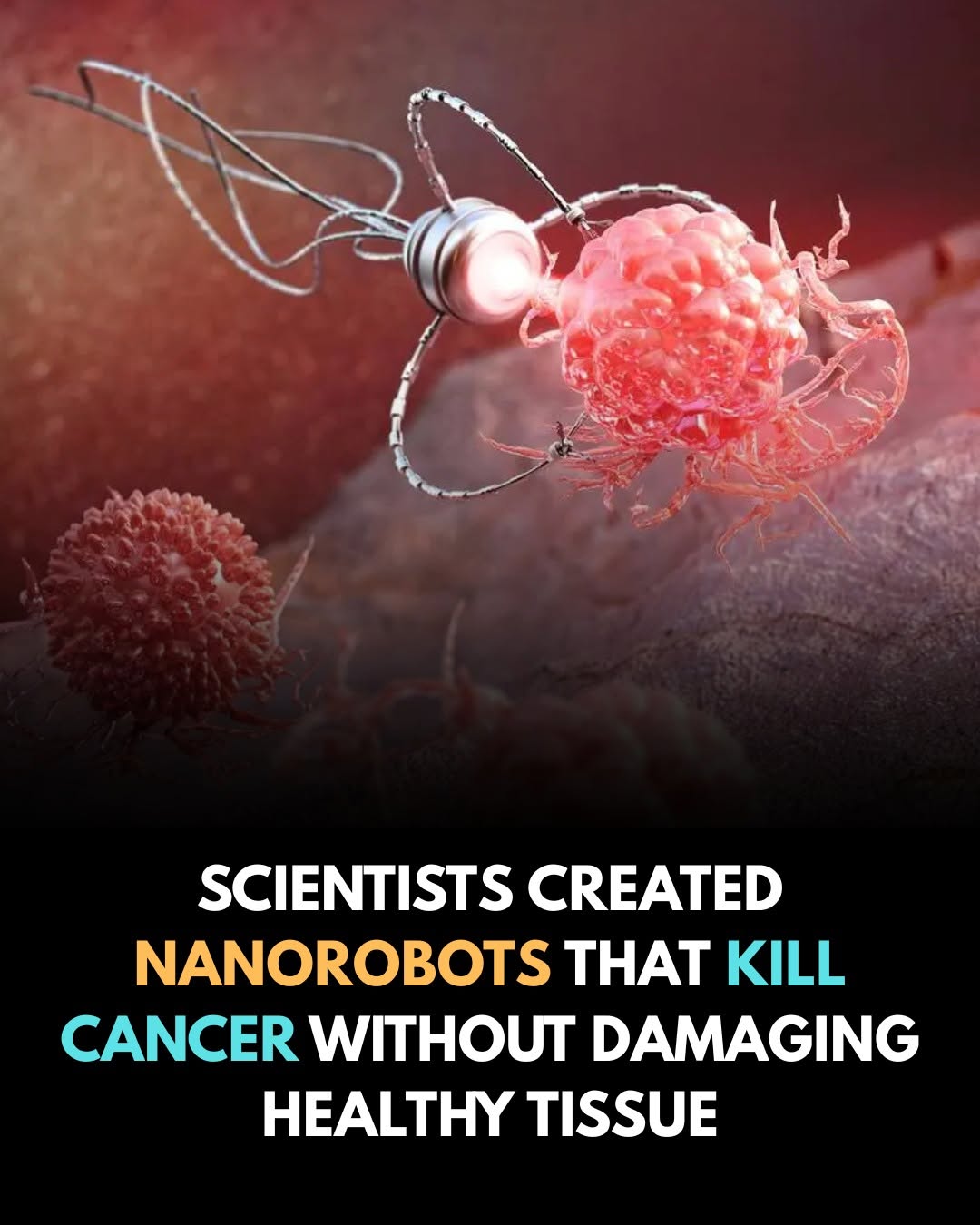
Researchers have developed DNA-based nanorobots that selectively target and destroy cancer cells while leaving healthy tissue unharmed.
In a major advance in nanomedicine, scientists at the Karolinska Institutet in Stockholm created DNA-based nanorobots designed to deliver cancer treatment with exceptional precision. Using a technique known as DNA origami, the researchers built microscopic delivery systems that conceal a cancer-fighting peptide, preventing it from affecting healthy tissue.
The therapeutic peptide is only exposed and activated when the nanorobots encounter the acidic, low-pH environment commonly found in solid tumors. This built-in “kill switch” ensures the treatment is released only at the tumor site, minimizing its impact on normal cells.
In animal studies, the pH-responsive nanorobots reduced breast cancer tumor growth by up to 70% compared with control groups. Because healthy tissue typically maintains a neutral pH of about 7.4, the therapeutic payload remains folded and inactive, helping protect surrounding healthy cells.
Although additional research and clinical trials are needed to evaluate the technology’s safety, toxicity, and effectiveness in humans, the findings represent a significant step forward in cancer research and may contribute to future treatments with fewer body-wide side effects. -
BeePetLove1784199892
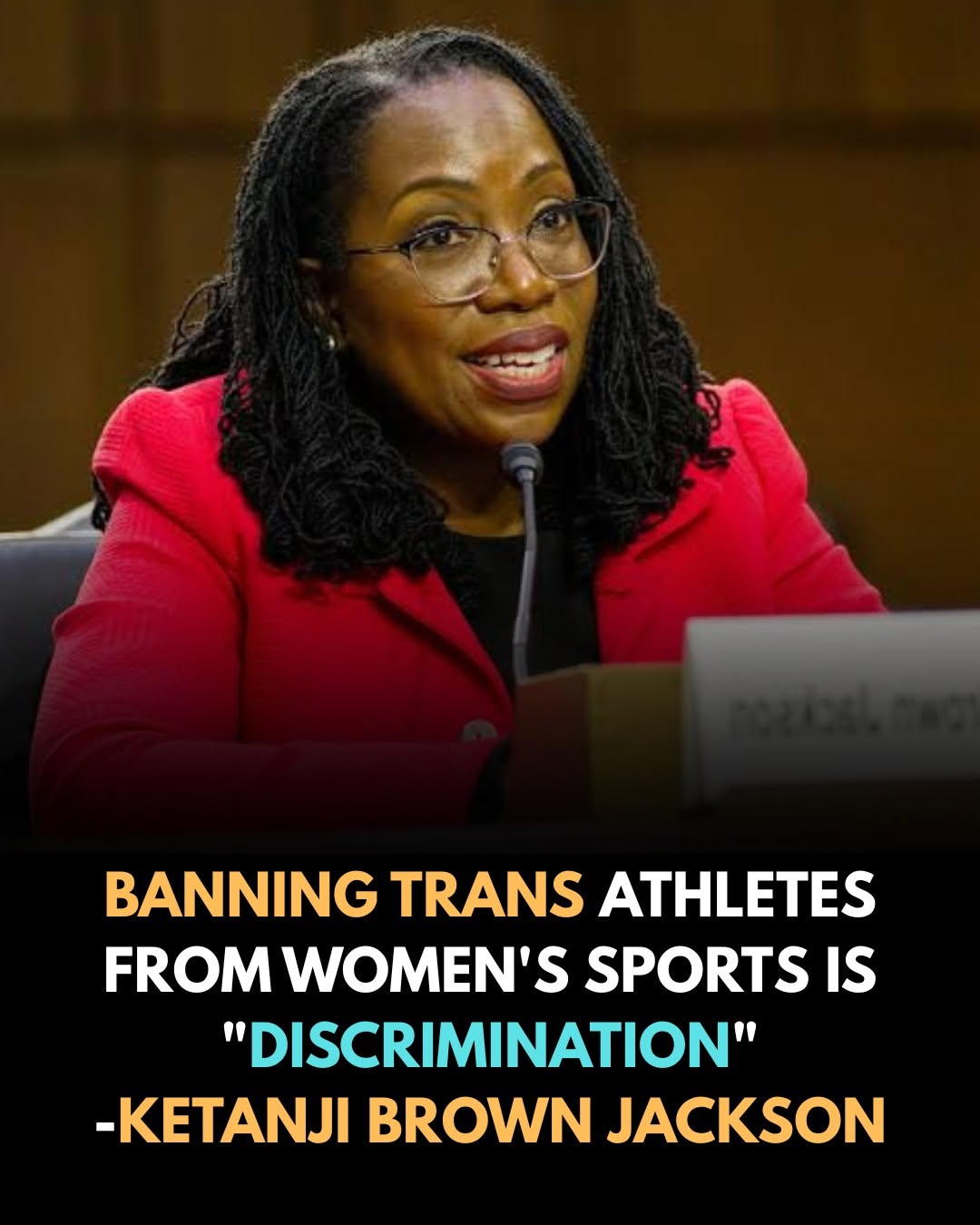
Justice Ketanji Brown Jackson’s dissent in the transgender athlete case reflects what critics describe as the progressive movement’s approach to women’s sports. In her opinion, she argued that excluding transgender athletes from competing in women’s sports constitutes discrimination, maintaining that Title IX’s reference to “sex” should not be interpreted solely as sex assigned at birth and that such restrictions impose gender-based expectations.
Critics argue that this interpretation redefines the purpose of Title IX and undermines protections for women’s athletics. They contend that the law was created to expand opportunities for female athletes and that applying it in this way weakens the competitive categories it was intended to protect.
They also argue that biological differences—including strength, speed, and bone density—provide advantages that they believe cannot be eliminated through legal interpretation alone. From this perspective, maintaining separate women’s sports categories is a matter of fairness and preserving equal competition for female athletes who have trained throughout their lives.
Supporters of this view argue that protecting women’s sports is not discriminatory but rather an effort to uphold fairness and the original intent of Title IX. They also contend that many Americans share these concerns and oppose policies that allow transgender women to compete in women’s athletic competitions. -

BeePetLove1784166520
A senior cardinal from the Vatican has stated that rainbow flags do not belong inside Catholic churches, reigniting one of the most significant debates within Christianity today.
Cardinal Gerhard Müller, the former head of the Vatican’s doctrinal office, argued that Catholic churches should display only Christian symbols. He said that allowing LGBTQ+ rainbow flags inside places of worship replaces the Gospel message with what he views as secular and political ideology, which he believes is inconsistent with the purpose of a sacred space.
Supporters of Müller’s position say he is defending long-standing Church doctrine. They argue that the Catholic Church has historically defined marriage and human creation in specific terms, and that displaying movement-related symbols inside churches blurs the distinction between faith and politics in a way that could weaken the institution’s religious identity.
Critics, however, argue that this approach can make LGBTQ+ Catholics feel excluded from a faith community that seeks to welcome all people. The broader issue facing the Church, they say, is how to preserve longstanding traditions while ensuring that everyone feels they have a place within the community. -

BeePetLove1784156638
Rep. Nancy Mace argues that the Democratic Party has moved away from its traditional positions and embraced what she describes as a radical, anti-American ideology that she believes resembles communism.
According to Mace, policies involving free speech, private property, and expanded government authority reflect a broader ideological shift. She contends that these similarities are significant and believes the mainstream media has not adequately covered them.
Mace maintains that her criticism is intended to highlight what she sees as the Democratic Party’s growing focus on ideology over the Constitution and the interests of working Americans. -

BeePetLove1784145383
Scientists in China have developed experimental contact lenses that enable people to see near-infrared light, which is normally invisible to the human eye. The technology could eventually offer a lightweight alternative to traditional night-vision goggles.
The soft contact lenses contain tiny nanoparticles that convert near-infrared light into visible light. They operate without batteries or built-in electronic components.
In laboratory experiments, both mice and human volunteers were able to detect flashing near-infrared light while wearing the lenses. Researchers also found that the effect was stronger with closed eyes because near-infrared light passes through the eyelids more effectively than visible light.
The technology is still in the experimental phase and has several important limitations. The lenses cannot see in complete darkness, detect body heat like thermal imaging cameras, or replace conventional night-vision equipment. They function only with near-infrared light sources under controlled conditions.
Researchers believe the lenses could eventually have applications in search and rescue, medical imaging, secure communications, and assisting people with certain types of color vision deficiency. However, additional testing is required before the technology can be made available to the public.
The findings were published in the peer-reviewed journal Cell. -

BeePetLove1784134275
President Trump welcomed five Holocaust survivors to the Oval Office.
The meeting comes amid growing concerns about rising antisemitism in the United States and around the world, underscoring the importance of preserving the firsthand accounts of Holocaust survivors while they are still able to share their experiences. -

BeePetLove1784123951
Rising Temperatures Could Make AI Data Centers More Expensive to Cool
As demand for AI continues to grow, a new study suggests that climate change is reducing the effectiveness of one of the most affordable and energy-efficient methods used to cool data centers.
Researchers from the University of Hawaiʻi at Mānoa, publishing in Scientific Reports, analyzed 45 years of hourly weather observations, climate model projections, and a global database of data center locations. Their findings indicate that rising temperatures and increasing humidity are more frequently exceeding the recommended limits for direct air free cooling, a technique that relies on cool outdoor air instead of mechanical cooling systems.
According to the study, these unfavorable conditions have become significantly more common over the past 45 years, particularly in tropical regions and the southeastern United States. As a result, a growing number of data centers now face conditions that limit the use of direct air free cooling for at least one-quarter of the year.
The researchers project that these limitations will continue to expand through the middle of the century as temperatures and humidity continue to rise. They also found that the most extreme heat and humidity events are becoming more severe at a faster rate than average conditions, creating additional challenges for data center reliability, emergency planning, and infrastructure design.