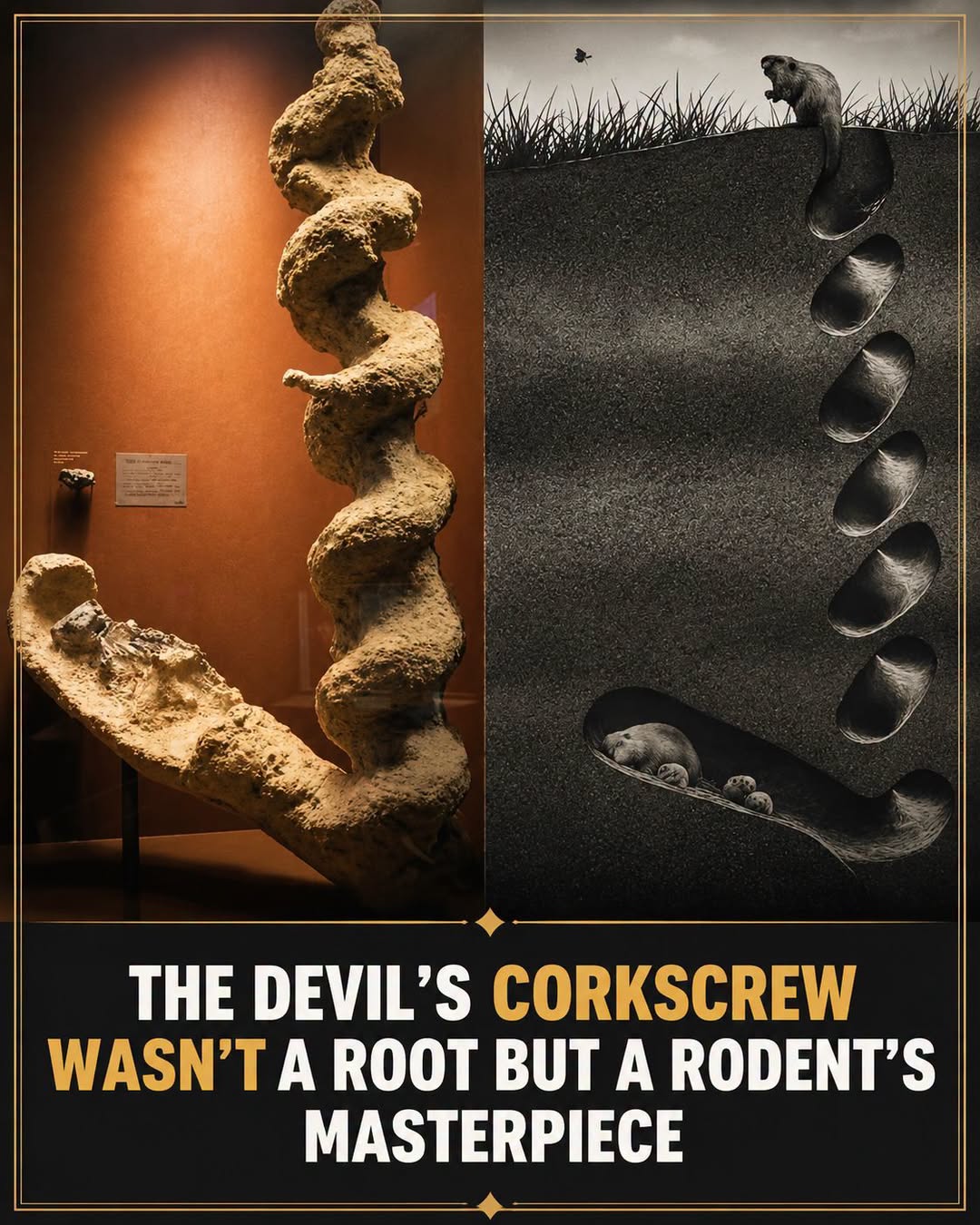
At first glance, it looks like something out of science fiction—a giant spiral carved into ancient rock. But this fossil, known as a Daemonelix or “Devil’s Corkscrew,” is very real and tells the fascinating story of life below the surface during the Miocene Epoch. Found in the sediment layers of Nebraska and dating back roughly 20 million years, this extraordinary structure left scientists baffled for decades after its discovery in the 1890s.
Initially thought to be fossilised plant roots or the remnants of ancient freshwater sponges, the true identity of the Daemonelix remained a mystery. It wasn’t until further studies and fossil associations were made that paleontologists determined its origin: it was a burrow. But not just any burrow. This spiralling tunnel was crafted by an extinct beaver-like rodent named Palaeocastor.
This ancient mammal dug vertical helical burrows deep into the ground, possibly as a means of escaping predators and creating a safe, stable environment to raise its young. The spiral design may have helped regulate temperature or keep out flooding, demonstrating an impressive level of evolutionary adaptation. Fossils of Palaeocastor have even been found inside some of these corkscrews, often alongside evidence of predator-prey interactions with ancient mustelids like Zodiolestes, a prehistoric relative of the weasel.
What makes the Daemonelix so special is that it is a trace fossil—not the remains of the animal itself but a record of its behaviour, a snapshot of instinct preserved in stone. It reveals how even the smallest creatures left lasting marks on the world, shaping their environment in ways that still speak to us millions of years later.
Fun Fact: The term Daemonelix was coined by early fossil hunters who, baffled by the strange shape, believed it had supernatural origins.
#MockingMerriment #FossilFacts #Daemonelix #Evolution #MioceneEpoch #Paleontology #TraceFossils #Palaeocastor #AncientMysteries #PrehistoricLife
Leave a Reply
You must be logged in to post a comment.