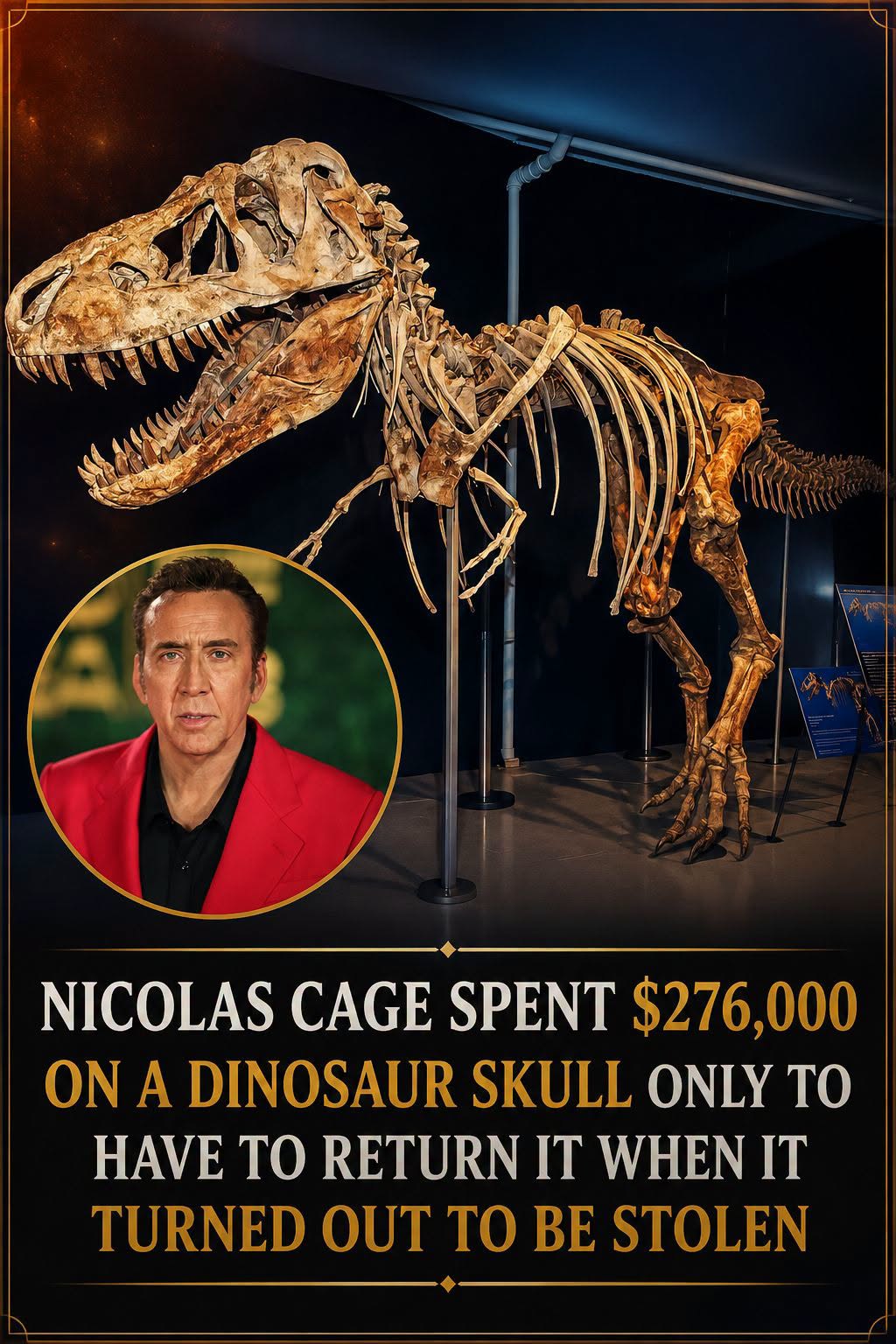
When Nicolas Cage outbid Leonardo DiCaprio at an auction for a Tyrannosaurus bataar skull, it made headlines. The Hollywood actor reportedly paid $276,000 for the 67-million-year-old fossil, adding yet another extravagant item to his legendary collection. But what seemed like a prized possession soon turned into an international controversy.
The skull, which closely resembles the North American Tyrannosaurus rex but comes from Mongolia, turned out to have been illegally excavated and smuggled into the United States. Years after the purchase, Cage was contacted by federal authorities investigating the fossil’s origin. Once he learned it had been looted, Cage voluntarily surrendered the skull so it could be returned to Mongolia.
Tyrannosaurus bataar lived during the Late Cretaceous period and was a close cousin of T. rex. Fossils of this species are extremely rare and are considered national treasures in Mongolia. The country has strict laws protecting its paleontological heritage, and illegally exported fossils have been the focus of several high-profile investigations.
Cage’s decision to return the skull without legal dispute was praised by officials, but the incident remains one of the more unusual chapters in his life of eccentric purchases. From buying castles to exotic pets, the dinosaur skull stood out not just for its price tag but for the legal and ethical questions it raised about fossil ownership and global heritage.
Fun Fact: The fossil was originally discovered in the Gobi Desert, a hotspot for some of the most well-preserved dinosaur finds in the world.
#MockingMerriment #Dinosaurs #Paleontology #PrehistoricLife #FossilFacts #CretaceousPeriod #GobiDesert #FossilDiscovery #TyrannosaurusBataar
Leave a Reply
You must be logged in to post a comment.