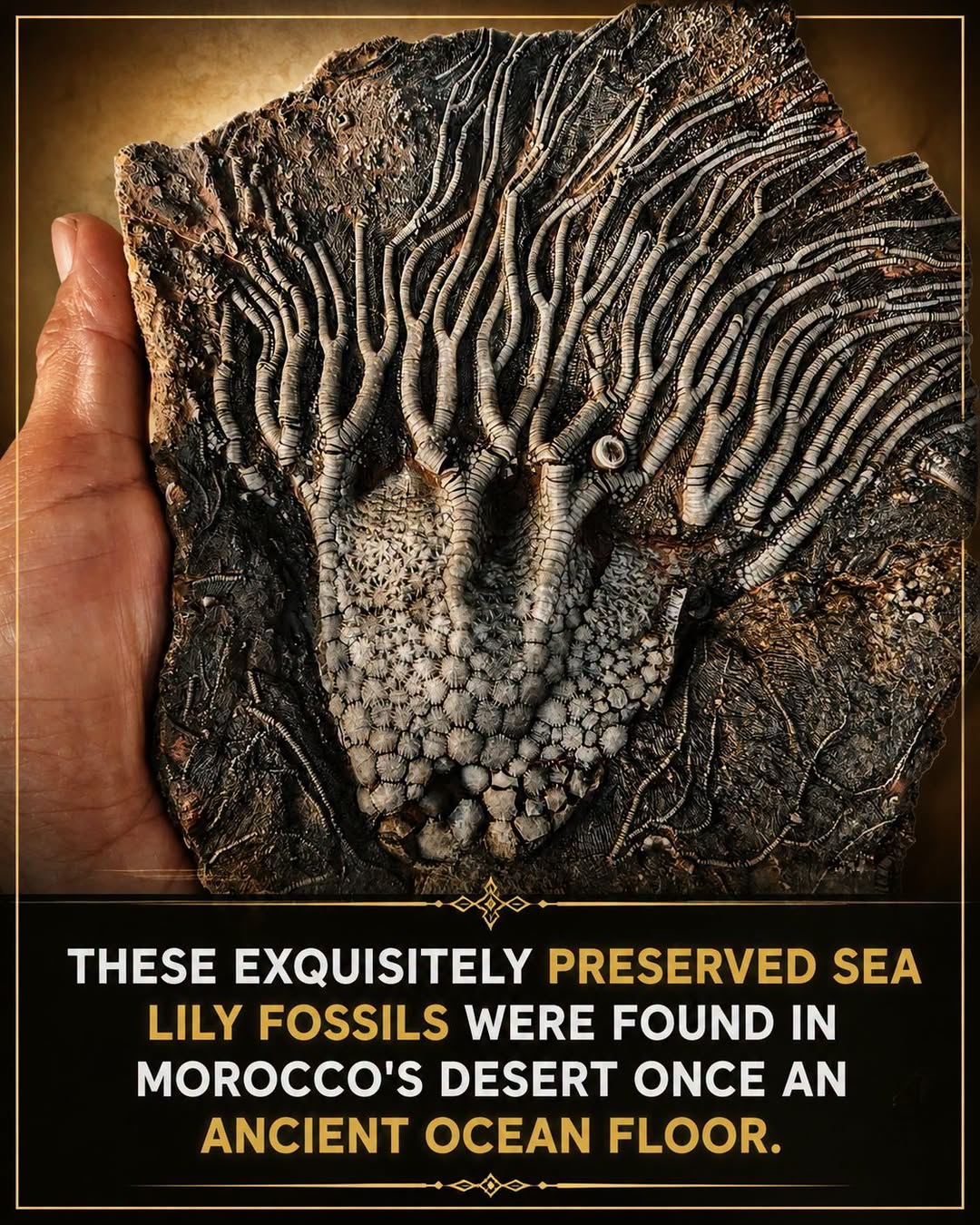
In the heart of the Moroccan desert, scientists have uncovered a breathtaking fossil find that offers a glimpse into a forgotten underwater world. Perfectly preserved fossilized crinoids—also known as sea lilies—have been discovered in remarkable detail, revealing marine life that flourished hundreds of millions of years ago in what is now a sun-scorched desert.
Despite their delicate, flower-like appearance, crinoids are not plants but animals closely related to starfish and sea urchins. Using their feathery arms, they filtered food from ocean currents while anchored to the sea floor by long stems. These ancient creatures once filled vast shallow seas, covering areas that have since transformed into arid landscapes. Their presence in Morocco is powerful evidence of Earth’s dramatic environmental shifts over geological time.
What sets this discovery apart is the exceptional state of preservation. The fine structures of the crinoid arms and stems have been fossilised with extraordinary clarity. Such detail is rare and allows paleontologists to examine not only the anatomy of individual species but also the diversity of entire marine ecosystems that existed long before the rise of dinosaurs. These fossils are a valuable resource for understanding evolutionary biology, climate changes, and the shifting positions of continents.
The Moroccan desert is already known as a treasure trove for fossil hunters, producing everything from ancient trilobites to gigantic marine reptiles. The discovery of crinoids adds yet another layer to this region’s rich prehistoric legacy. It reminds us that Earth’s surface has been reshaped many times, and that the rocks beneath our feet often hold clues to worlds that no longer exist.
Fun Fact: Crinoids have existed for over 480 million years and some species are still alive today in the deep oceans, making them true survivors of multiple mass extinctions.
#MockingMerriment #FossilDiscovery #MarineLife #SeaLilies #PrehistoricLife #Paleontology #Evolution #MoroccanFossils #AncientOceans #Crinoids
Leave a Reply
You must be logged in to post a comment.