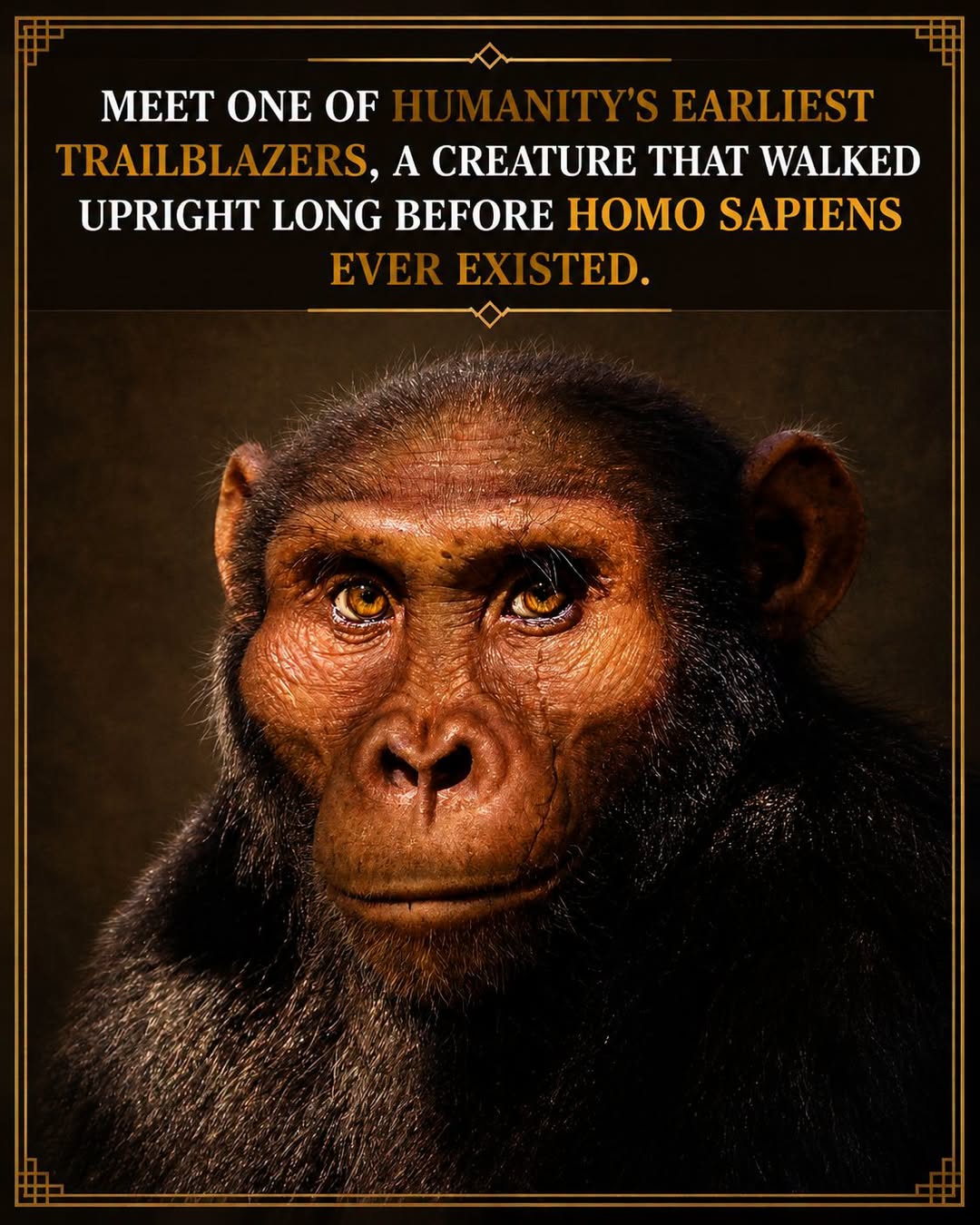
Australopithecus is a key figure in the human evolutionary story. Living around 3.5 million years ago during the Late Pliocene and Early Pleistocene, this genus represents one of the earliest known hominins to display a combination of ape-like and human-like features. Fossils of Australopithecus have been found across Eastern and Northern Africa—regions often referred to as the cradle of humanity. These early ancestors roamed through grasslands and woodlands, adapting to a changing climate and new survival challenges that shaped our lineage.
One of the most famous members of this genus is Australopithecus afarensis, with “Lucy” being the most iconic specimen. Discovered in 1974 in Ethiopia, Lucy stood about 1.1 metres tall and walked upright, providing crucial evidence that bipedalism preceded larger brain development in human evolution. This trait set Australopithecus apart from other primates and laid the groundwork for future hominin advancements.
Australopithecus had relatively small brains, averaging around 400 to 500 cubic centimetres, but they were intelligent tool users. Though not as advanced as Homo species, their ability to manipulate objects, use basic tools, and adapt to diverse environments speaks volumes about their survival instincts and evolutionary significance.
Their anatomy reveals much about their lifestyle. While they could walk upright, their curved fingers and long arms suggest they still spent time climbing trees, likely for foraging or avoiding predators. This dual ability to navigate both the ground and trees made them versatile and successful in the ever-changing African landscapes.
Fun Fact: The name “Australopithecus” means “southern ape,” a reference to the first discoveries made in southern Africa. Despite their name, these ancestors were already taking some of the first steps toward becoming fully human.
#MockingMerriment
#EarlyHumans #HumanEvolution #PrehistoricLife #Anthropology
#LucyFossil #Archaeology #Australopithecus #Paleontology #FossilDiscovery
Leave a Reply
You must be logged in to post a comment.