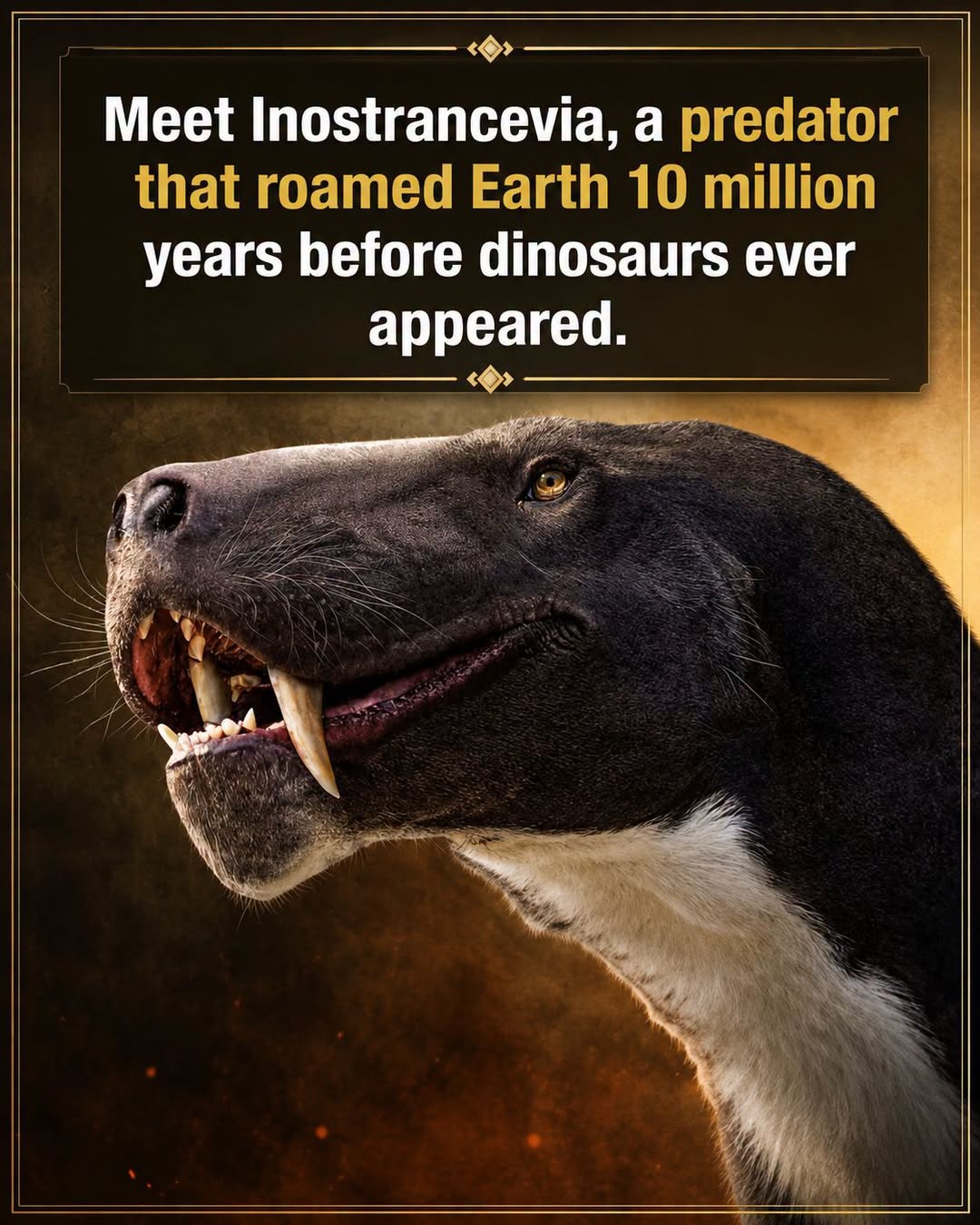
Long before the first dinosaur ever took a step, a terrifying predator named Inostrancevia roamed the planet. With massive saber-like teeth and a long, muscular body, this ancient hunter was one of the top predators of its time, dominating the Earth nearly 260 million years ago, during the Late Permian period.
Inostrancevia wasn’t a reptile, and it certainly wasn’t a cat, despite its fierce fangs. It belonged to a group called therapsids—strange, mammal-like creatures that sit on the evolutionary branch between reptiles and mammals. These “proto-mammals” are key to understanding how modern mammals, including humans, eventually evolved.
This saber-toothed predator likely measured up to 10 feet long and had a skull nearly the size of a wolf. Its curved fangs could pierce deep into flesh, and it may have relied more on brute strength and ambush tactics than speed. Some paleontologists think it hunted like a modern crocodile, striking with sudden force, clamping down on prey, and using its powerful body to wrestle animals into submission.
Fossil evidence of Inostrancevia has been uncovered across what is now Russia and even as far south as South Africa. This widespread distribution suggests it was one of the dominant carnivores in the period just before the largest extinction event in Earth’s history—the Permian-Triassic extinction, which wiped out over 90 percent of species on the planet. It lived in a world filled with strange creatures and harsh conditions, carving out its reign long before the mighty dinosaurs would emerge.
Yet despite its age, Inostrancevia holds a critical place in the evolutionary puzzle that links ancient reptiles to modern mammals.
Fun Fact: Though it looked reptilian, Inostrancevia is more closely related to mammals than to dinosaurs or lizards.
#MockingMerriment
#Evolution #AncientMammals #Paleontology #PermianPeriod #PrehistoricLife #Inostrancevia #FossilDiscovery #PrehistoricPredators #Therapsids
Leave a Reply
You must be logged in to post a comment.