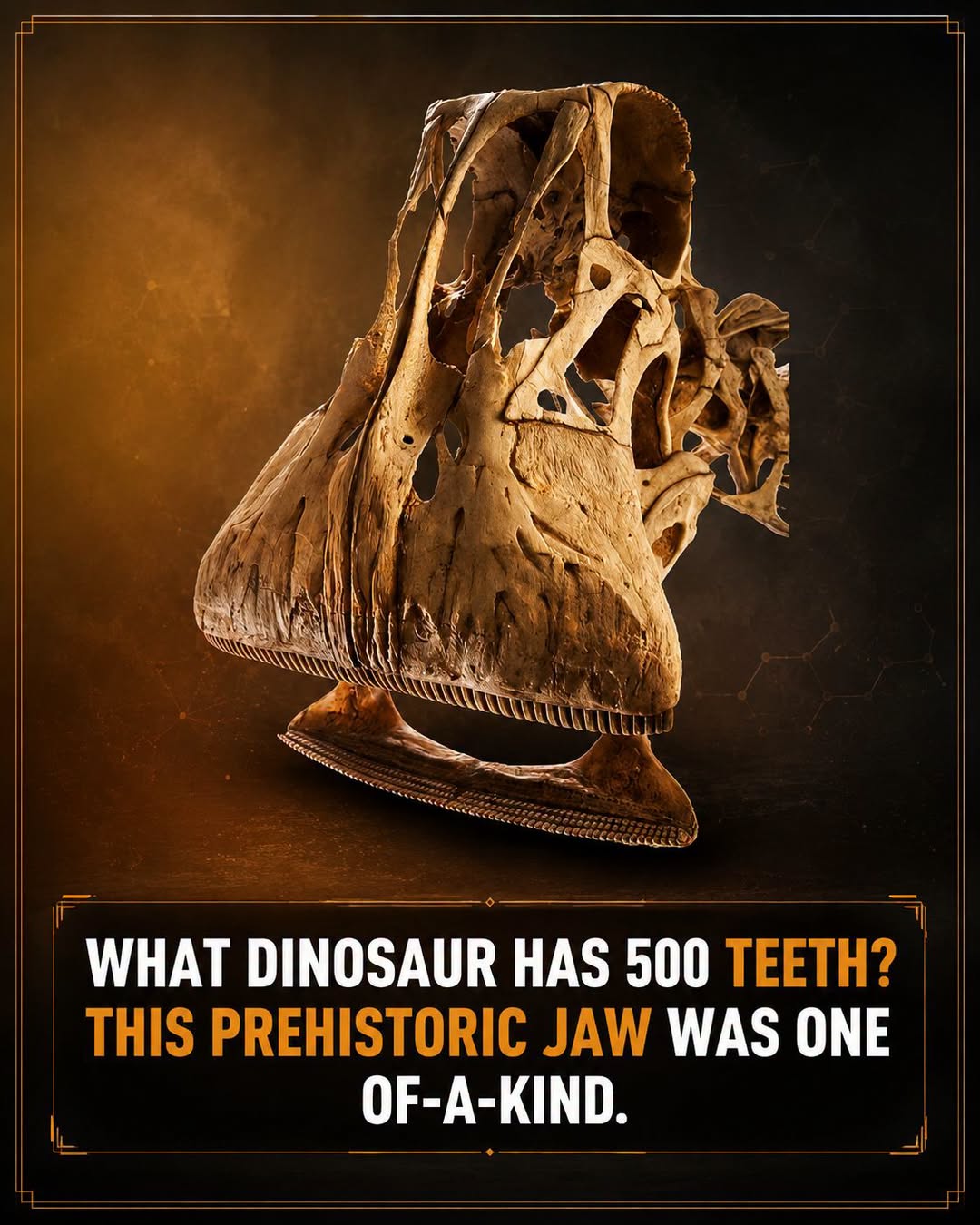
Meet Nigersaurus taqueti, one of the most fascinating and bizarre plant-eating dinosaurs ever discovered. Living about 105 million years ago during the mid-Cretaceous period, this gentle giant roamed the lush floodplains of what is now the Republic of Niger in West Africa. With a body length of around 30 feet and weighing nearly two tons, Nigersaurus may not have been the biggest dinosaur around, but its jaw was unlike anything else in the prehistoric world.
Nigersaurus had more than 500 teeth packed into a wide, flattened snout shaped almost like a vacuum nozzle. These teeth were arranged in rows that constantly regrew, making this dinosaur one of nature’s earliest conveyor belt grazers. It used this specialised mouth to strip soft, low-lying vegetation like ferns and horsetails from the ground in a feeding style that resembled a living lawn mower.
What made Nigersaurus even more unique was the orientation of its jaw. Its mouth was positioned at the very front of the skull and angled downward, perfectly adapted for grazing close to the ground. Combined with its lightweight bones and long neck, it was highly efficient at sweeping through vegetation without ever needing to raise its head. This unusual anatomy puzzled palaeontologists for years until CT scans and reconstructions finally revealed its astonishing feeding mechanics.
Despite its bizarre appearance, Nigersaurus played a crucial role in its ecosystem. Its constant grazing helped maintain the balance of plant life, much like large herbivores do today in African savannas.
Fun Fact: The teeth of Nigersaurus were so delicate that they needed to be constantly replaced. Some individual teeth lasted just a few weeks before being swapped out.
#MockingMerriment #JurassicWorld #CretaceousPeriod #HerbivorousDinosaurs #FossilDiscovery #PrehistoricLife #Paleontology #DinosaurFacts #Nigersaurus
Leave a Reply
You must be logged in to post a comment.