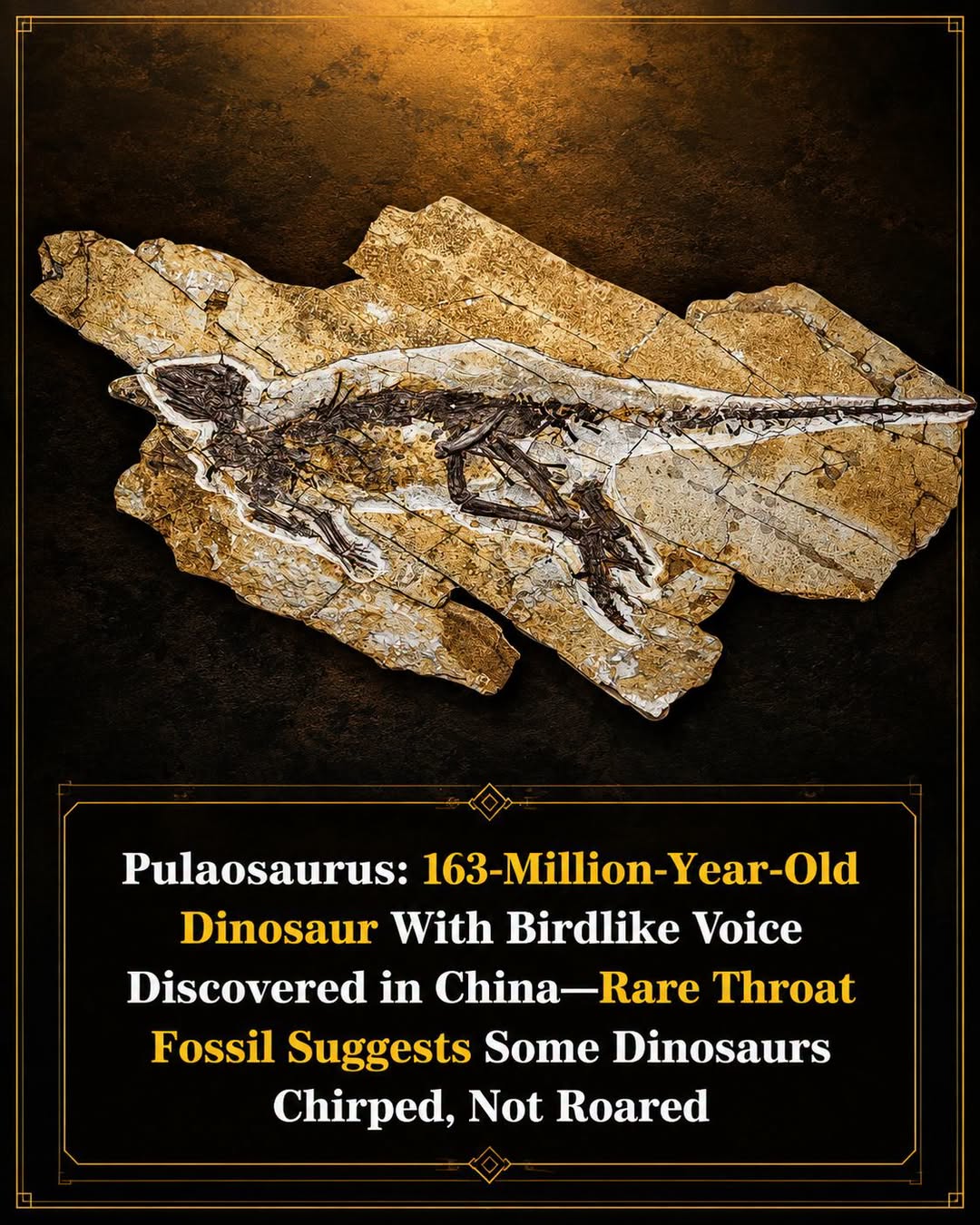
Scientists in China have discovered a new species of tiny dinosaur, named Pulaosaurus qinglongin, that lived 163 million years ago—and may have sounded more like a bird than a beast. Unearthed from the Tiaojishan Formation in Hebei Province, this 28-inch-long herbivore is an extraordinary find. Why? Because it’s only the second dinosaur ever discovered with preserved throat bones—specifically, ossified laryngeal elements, a structure associated with vocalization.
That’s a huge deal. Most soft tissue, like the voice box and throat, rarely fossilizes. But in this case, the fossil was so complete and well-preserved that paleontologists could examine its vocal anatomy. The evidence suggests Pulaosaurus may have produced birdlike chirps or tweets—not thunderous roars. The find pushes back the origins of avian-style vocalization millions of years earlier than expected—and in a species not even related to birds.
The only other known dinosaur with similar vocal structures? An armored ankylosaur named Pinacosaurus. That makes this chirping duo a rarity in the fossil record and a game-changer for how we imagine ancient dinosaur soundscapes.
Named after the mythical Chinese dragon Pulao, said to make loud cries, Pulaosaurus has now become the voice of a new theory: that vocal communication in dinosaurs may have been much more diverse and subtle than we ever thought.
Fun Fact: The fossil’s tiny throat bones were so delicate, it’s a scientific miracle they survived at all—yet they now give voice to a creature silent for over 160 million years.
#MockingMerriment #VocalDinosaurs #FossilDiscovery #DinosaurDiscovery #Paleontology #JurassicPeriod #Pulaosaurus #PrehistoricLife #ChinaFossils #DinosaurSounds
Leave a Reply
You must be logged in to post a comment.