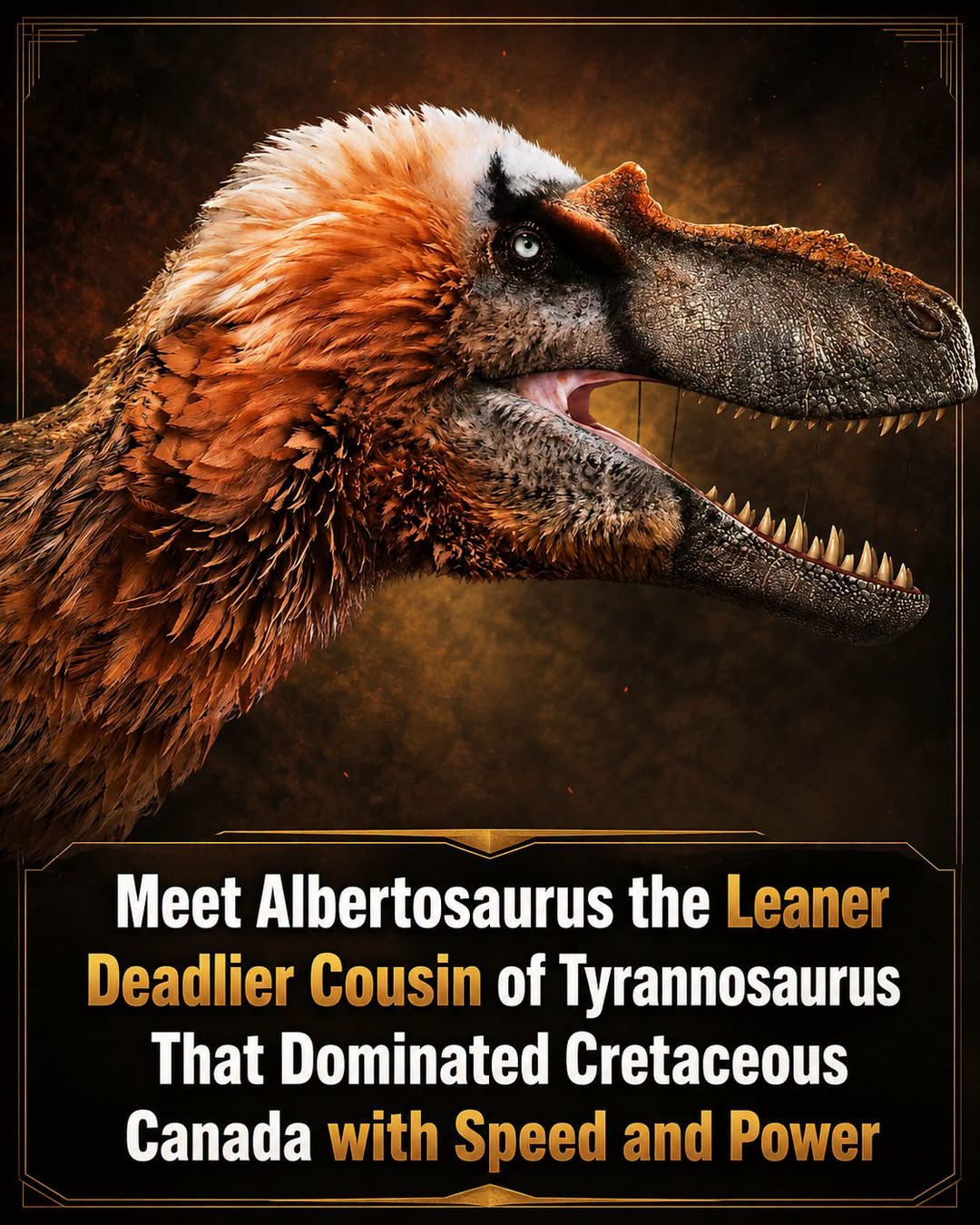
They say bigger isn’t always better, and Albertosaurus is the perfect example of that. Though it shared its lineage with the mighty Tyrannosaurus rex, Albertosaurus carved out its own legacy as a swift, deadly predator in the Late Cretaceous wilds of what is now western Canada.
Living around 70 million years ago, Albertosaurus was a true apex predator in its ecosystem. While it wasn’t as large or as bulky as T. rex, it had something that arguably made it even more dangerous in its time—speed. With a body reaching up to 9 metres in length and weighing between 1.3 and 1.7 tonnes, Albertosaurus had a more lightweight build, allowing it to move quickly and strike with precision. Its skull was armed with dozens of sharp, serrated teeth capable of tearing through flesh with ease, and its keen sense of smell made it an efficient hunter.
Paleontologists believe Albertosaurus may have hunted in packs, which is rare among large theropods. Fossil sites in Alberta have uncovered groups of individuals of various ages buried together, suggesting a level of social behaviour that adds a whole new layer of intrigue to this fearsome dinosaur’s story. If true, this would have made Albertosaurus even more formidable, as coordinated hunting could bring down larger herbivores with ease.
Despite its similarities to T. rex, Albertosaurus belongs to a different genus within the tyrannosaurid family. It was the dominant predator in its region long before Tyrannosaurus came onto the scene. Its lighter build meant it thrived in its specific environment, where agility and pack tactics could turn the tide of survival.
Fun Fact: Albertosaurus had tiny, two-fingered arms like its famous cousin T. rex, but they were slightly more functional, possibly aiding in balance during high-speed chases.
#MockingMerriment
#Paleontology #Tyrannosaurid #PrehistoricLife #FossilDiscovery #CretaceousPeriod #ApexPredator #Dinosaurs #DinosaurFacts #Albertosaurus
Leave a Reply
You must be logged in to post a comment.