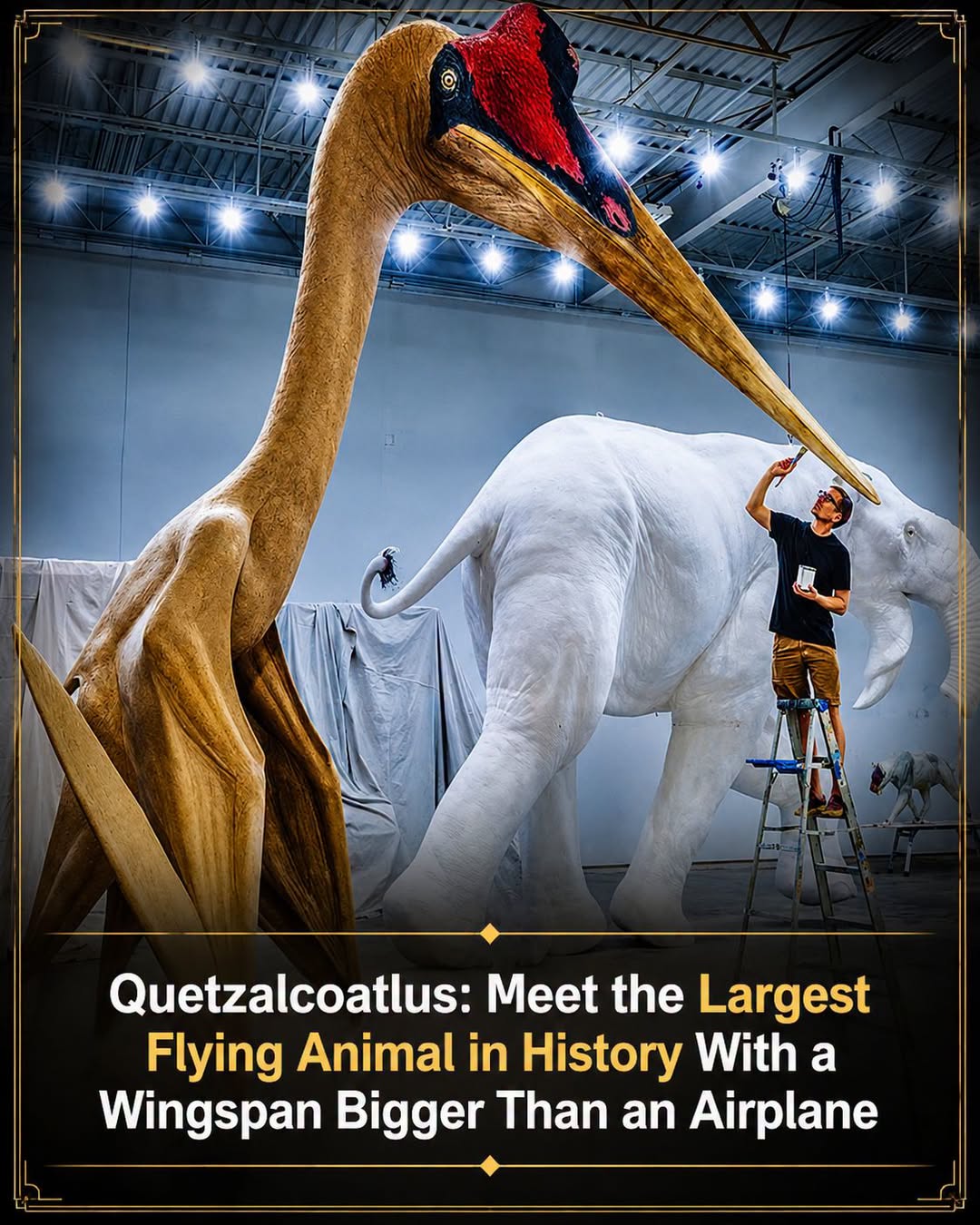
It wasn’t a bird. It wasn’t a dinosaur. It was something far more astonishing. Meet Quetzalcoatlus, the largest flying animal to ever live, soaring through the skies during the Late Cretaceous period over 70 million years ago. With a wingspan stretching up to 12 metres, it was as wide as a small airplane. And when it stood on solid ground, it towered at over 5 metres tall—eye-to-eye with a modern giraffe.
Quetzalcoatlus belonged to a group of flying reptiles known as azhdarchid pterosaurs. Despite its enormous size, it was incredibly lightweight due to its hollow bones, a feature that made flight possible. Researchers believe it launched into the air using powerful limbs, combining a leap with a strong downbeat of its massive wings—much like a four-limbed catapult. Once airborne, it could glide for kilometres at a time with minimal effort, scanning the prehistoric landscapes below.
This airborne giant wasn’t just a marvel of flight. It was also likely a skilled predator, stalking prey on land. Some scientists suggest it hunted small dinosaurs, reptiles, and carrion, using its long beak and sharp eyesight to spot movement from high above. Others argue it was more of a scavenger or even a wader that fed in river systems, similar to storks today.
Fossils of Quetzalcoatlus were first discovered in Texas, USA, in the 1970s, forever changing what we thought was possible in flight evolution. It was named after the Aztec feathered serpent god Quetzalcoatl, a fitting title for such a majestic and powerful creature.
Fun Fact: Despite being one of the largest flying animals ever, Quetzalcoatlus is not considered a dinosaur. It is a close relative but belongs to a separate branch of the prehistoric tree—pterosaurs.
#MockingMerriment #AncientAnimals #CretaceousPeriod #Quetzalcoatlus #PrehistoricLife #Pterosaur #Paleontology #DinosaurFacts #FlyingReptiles
Leave a Reply
You must be logged in to post a comment.