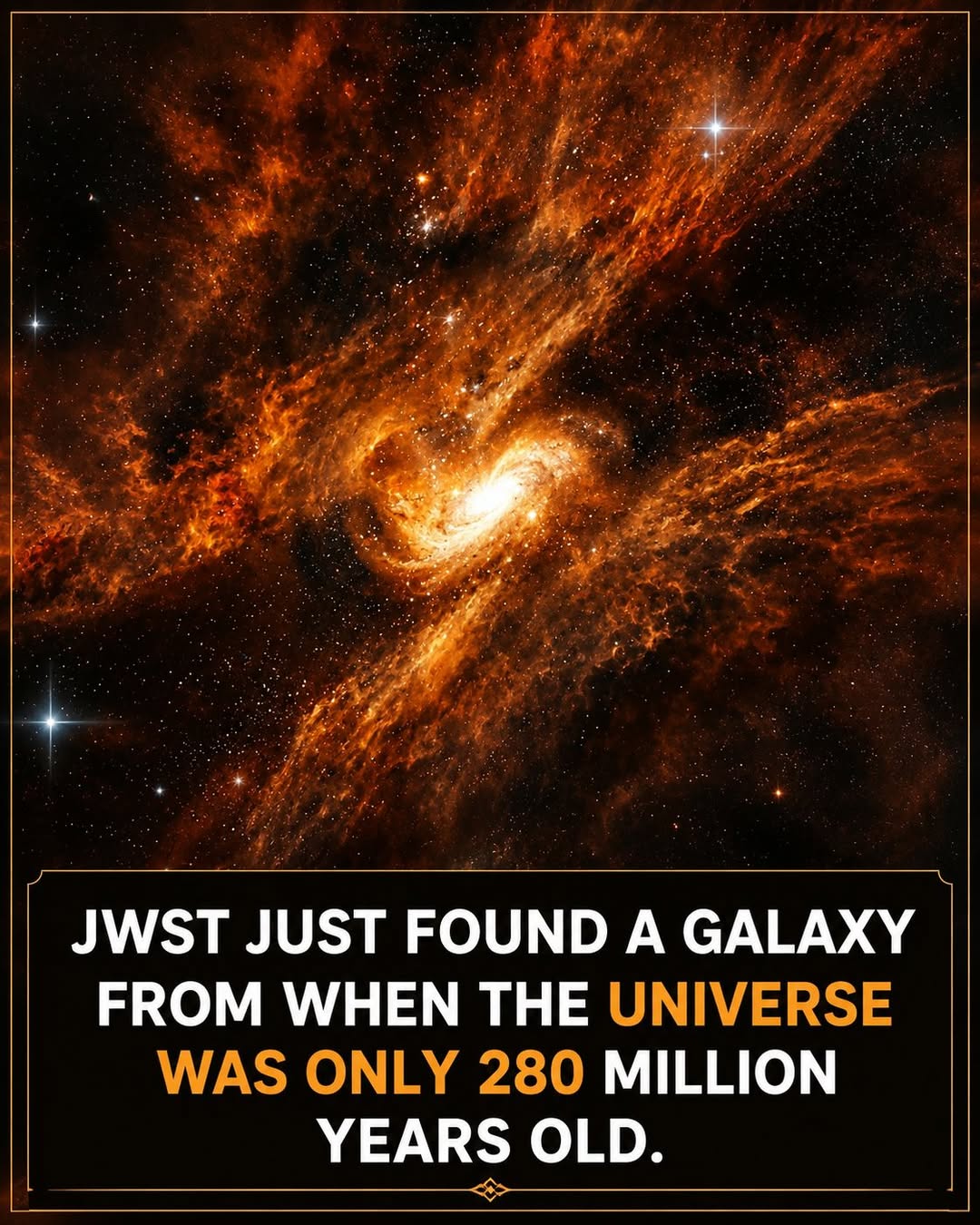
Meet JADES-GS-z14-0—a tiny but powerful galaxy that has taken the record for being the farthest and oldest confirmed galaxy ever observed. It sits at a redshift of 14.32, placing it a mere 280 million years after the universe began. That is about 13.5 billion years ago, reaching back to the very dawn of cosmic time.
What makes this discovery so revolutionary is not just the age of the galaxy, but what it contains. This galaxy is only about 240 light-years wide—extremely small compared to our Milky Way, which stretches over 100,000 light-years. Despite its size, JADES-GS-z14-0 is forming stars at a rate ten times faster than astronomers had expected for such an early point in cosmic history. It is rapidly building up mass and light in ways that defy current models of galaxy formation.
And then comes the most astonishing part. On March 20, 2025, scientists using the James Webb Space Telescope confirmed the presence of oxygen in this ancient galaxy. This is groundbreaking. Oxygen is a heavy element that only forms after generations of stars live and die. Its presence in such a young galaxy suggests that the universe’s first stars must have formed, evolved, and exploded far earlier than we thought possible.
This one discovery forces astronomers to reconsider the timeline of how the first galaxies and elements came into existence. Galaxies were not just flickering lights in a cold, dark universe. They were already rapidly evolving, chemically complex systems much sooner than anyone predicted.
Fun Fact: Light from JADES-GS-z14-0 took 13.5 billion years to reach us. That means we are seeing this galaxy as it was before our Earth even existed.
#MockingMerriment
#JADESGSz14_0 #Astronomy #JamesWebbSpaceTelescope
#GalaxyDiscovery #JWST #CosmicHistory #PrehistoricLife #EarlyUniverse #SpaceScience
Leave a Reply
You must be logged in to post a comment.