Author: IdyllicSafeguard

  • 1780335386IdyllicSafeguard72

    1780335386IdyllicSafeguard72

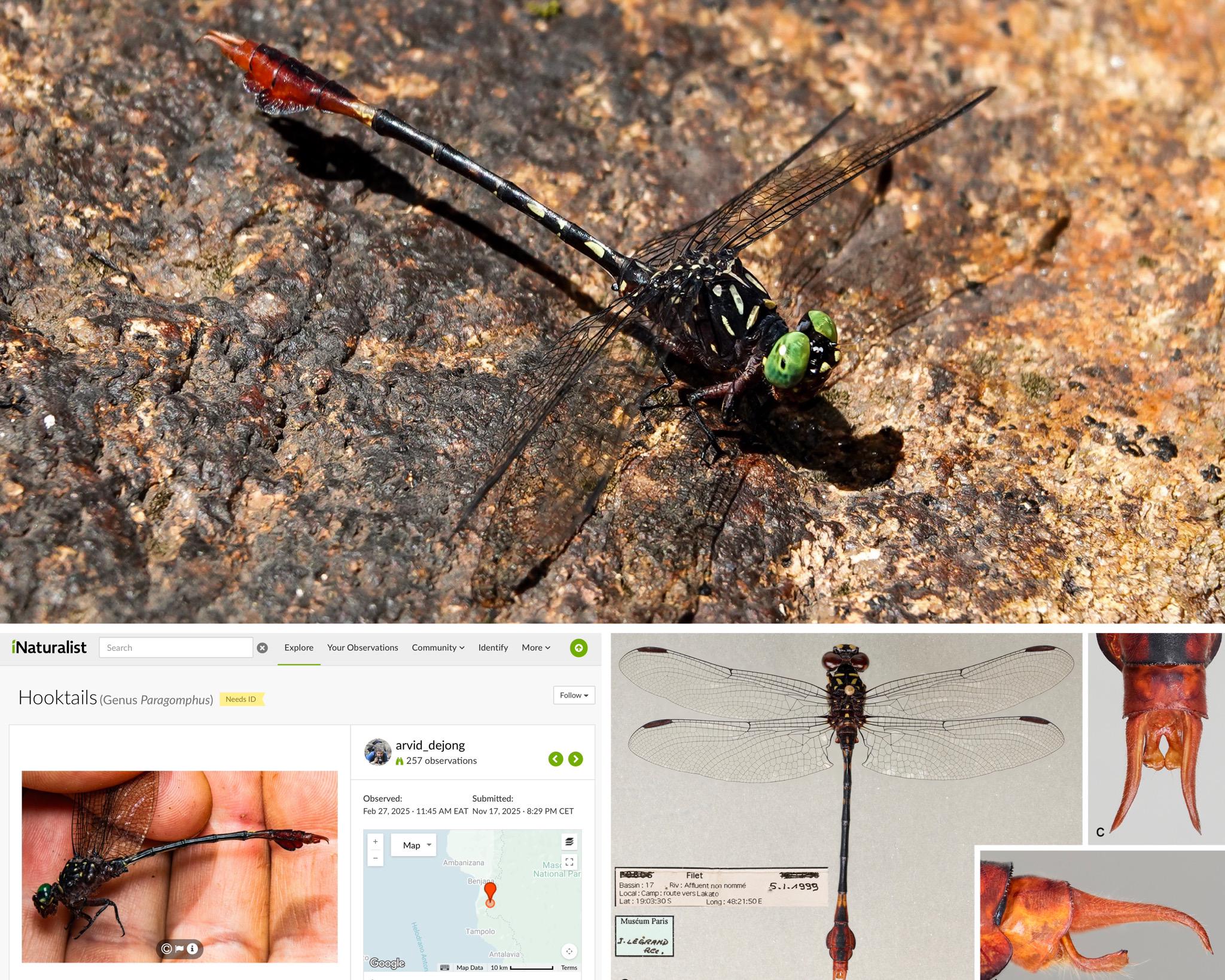
    In December 2024, a Slovenian research team found an exceptionally dark-bodied, green-eyed dragonfly sitting on a boulder along a small, unnamed tributary in southeastern Madagascar. They caught it, tentatively confident that it was an undescribed species. (Seen in top photo.)

    The following year, the researchers went searching for another specimen. But rather than traipse back into the rainforests of Madagascar, they turned to the internet. Specifically, they searched iNaturalist for dragonfly observations from Madagascar that matched their specimen, and they found one by a user named arvid_dejong. (Observation in bottom left.)

    It turns out that arvid_dejong had actually taken the dragonfly to the natural history museum in Stockholm, Sweden. And so the researchers were able to analyse a second specimen — this one from all the way up in the northeast, expanding the species’ range to cover a massive 1,033-kilometer (642-mile) stretch of Madagascar’s eastern coast.

    A couple of months later, in early 2026, two Polish dragonfly experts were visiting the Muséum national d’Histoire naturelle in Paris. Looking through its entomological archives, they found an unidentified dragonfly that was collected all the way back in 1999. Messaging the Slovenian team, they began an “intensive information exchange” that confirmed that this was a third specimen of the yet to be described hooktail. (Bottom right photo.)

    Together, on 29 May 2026, they finally described a new species: Paragomphus matroka, the dark hooktail — primarily distinguished by the specific structure of its ‘secondary genitalia’ and its somber, blackish colour. 

    The three specimens were uncovered by people of at least six different nationalities, found across three countries, in three different ways — field research, citizen science, and museum archives — all to describe a single species of dragonfly.

    Read the full story here!

    Source:

    Bedjanič, M., Bernard, R., Daraż, B. & Yu, K.-P. (2026) Paragomphus matroka sp. nov.—a new Hooktail species from the rainforests of eastern Madagascar (Odonata: Gomphidae). Zootaxa, 5821 (2), 219–235. https://doi.org/10.11646/zootaxa.5821.2.4
  • 1780695555IdyllicSafeguard199

    1780695555IdyllicSafeguard199

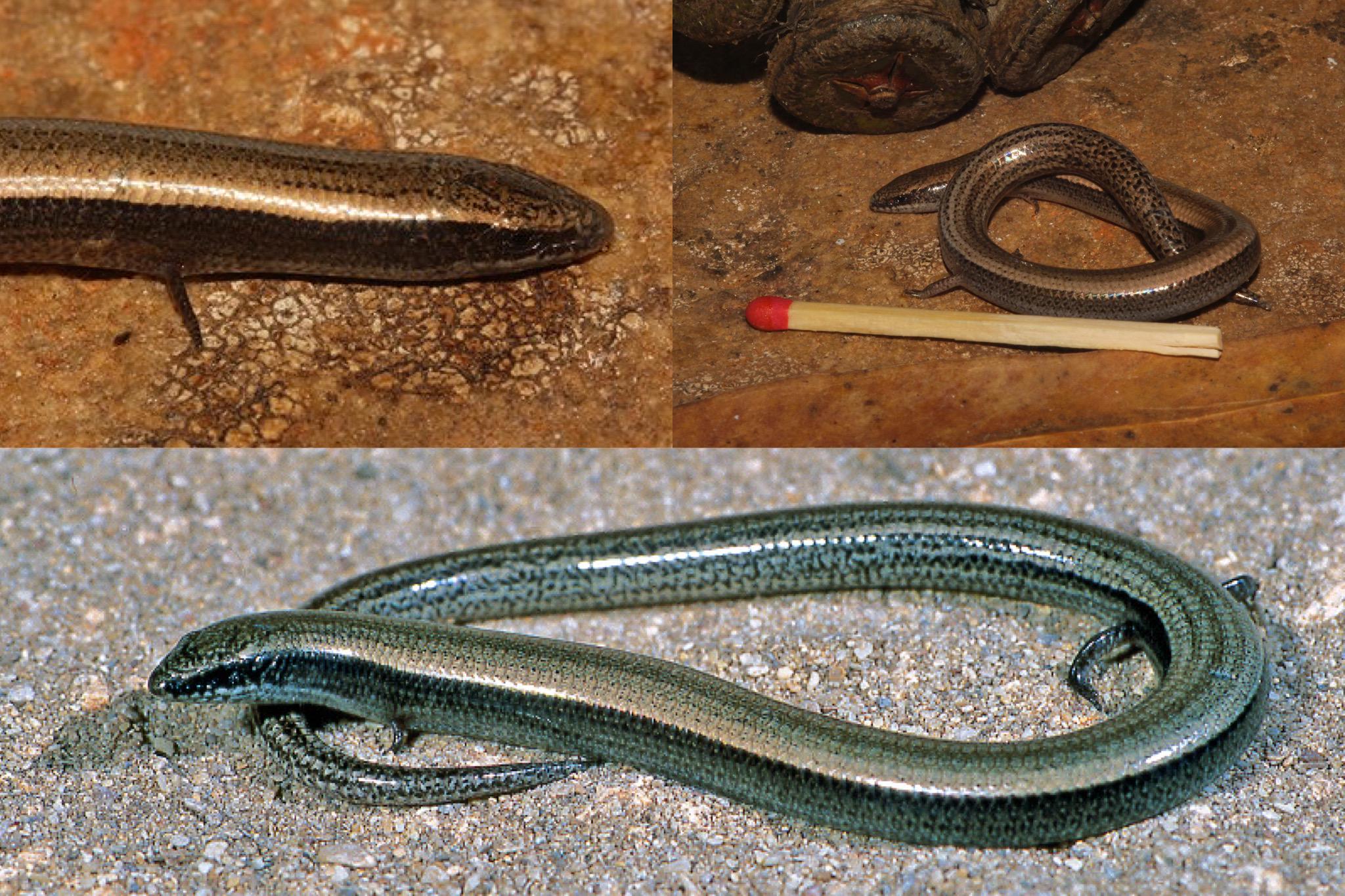
    As per its name, the two-fingered skink has only two digits on each of its comically tiny front limbs (and three on its hind). Its lineage diverged from its relatives — ‘grass-swimmers’ like the Italian three-toed skink — around 9.9 million years ago. Other species in its genus (Chalcides), like the Gran Canaria skink, have five digits on each foot, while Günther’s cylindrical skink has no limbs at all.

    Native to the sand dunes of the North African coast, the two-fingered skink is incredibly difficult to spot. It spends most of its life swimming beneath the sand, surfacing occasionally to ambush insect prey. Despite this, it remains a frequent target for keen-eyed predators like gulls.

    In one study, over 85% of adult skinks in a population had regenerated tails, suggesting that most individuals have survived at least one near-death encounter. This species is known for its hasty autotomy, dropping its tail at the first sign of danger. Juvenile two-fingered skinks even have bright red tails, likely to draw the attention of predators away from their bodies. 

    This tendency to drop-and-run means that researchers have to be especially careful while handling a two-fingered skink — sexing the adults, which requires carefully examining the cloaca and everting the hemipenis of males, is frequently avoided due to the high risk of stress-induced tail autotomy.

    To find these skinks, researchers often flip over beach debris like driftwood, beneath which they can sometimes be found resting. Unfortunately, the skinks are now more likely to be found under human litter: during surveys conducted in April 2009 and April 2013 along the Moroccan coast, two-fingered skinks were “found only by turning over rubbish like old clothes, cardboard, plastic etc.”

    As the two-fingered skink’s specific coastal habitat shrinks due to coastal development and rising sea levels, the species’ range is squeezed into a smaller and smaller sliver of coastline. As of the last IUCN assessment in May of 2024, it is a considered a Vulnerable species.

    Read the full story here.