The Horned Puffin (Fratercula corniculata) is a striking, stocky seabird native to the cold waters of the North Pacific Ocean. A close relative of the well-known Atlantic Puffin, it spends its summers breeding on the rocky cliffs of Alaska and Siberia before heading far out to sea for the winter.
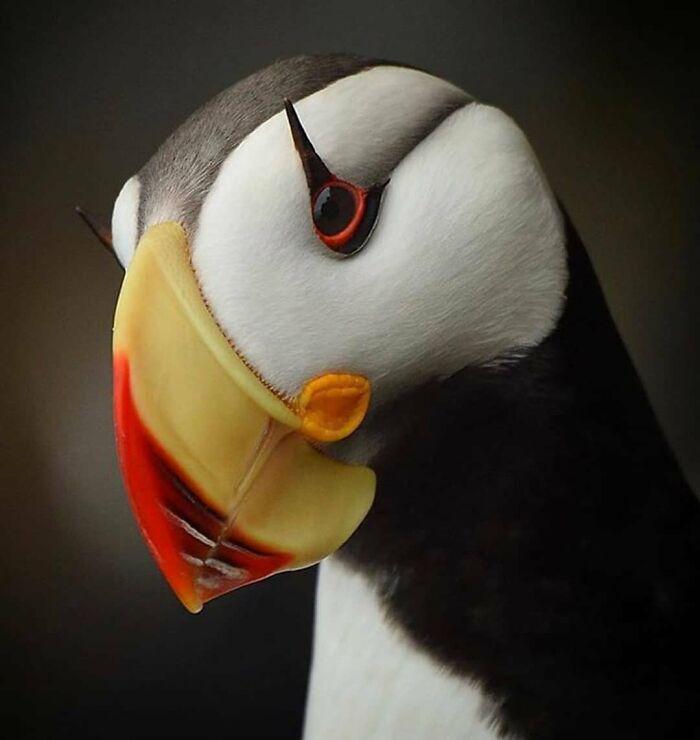
They get their name from a unique feature above their eyes: a small, dark, fleshy spike or "horn" that grows upward from the upper eyelid. They also have a striking orange line sweeping backward from their eye, giving them a very dramatic, painted look.
Their massive, bright yellow-and-orange beak is actually a seasonal accessory. In the spring, the bill grows a glowing outer layer to help attract mates. Once the breeding season ends in the autumn, they shed this colorful outer coating, leaving them with a much smaller, duller greyish beak for the winter.
While Atlantic Puffins are famous for digging deep underground burrows in soft soil, Horned Puffins take a different approach. They prefer to lay their single egg deep inside natural rock crevices, boulder piles, and steep cliff faces where land predators like foxes cannot reach them.
Horned Puffins are expert fishermen. They have specialized, backward-facing spines on the roof of their mouth called palatal denticles. This allows them to clamp down and hold dozens of slippery, wiggling small fish in their beak at the single time while continuing to hunt for more.
Because they are built to dive, they look a bit clumsy when flying through the air, flapping their short wings up to 400 times a minute. However, underwater, those same short wings act like powerful flippers, allowing them to effectively "fly" through the ocean depths down to 100 feet to catch prey.